Category Archives: Students

Authors

Digital Logics / T6

httpwww.buildersmagazine.rouploadsarticole206_taiwan_tower_P02.jpg

 Digital Logics

Patrik Schumacher – Parametricism – A New Global Style

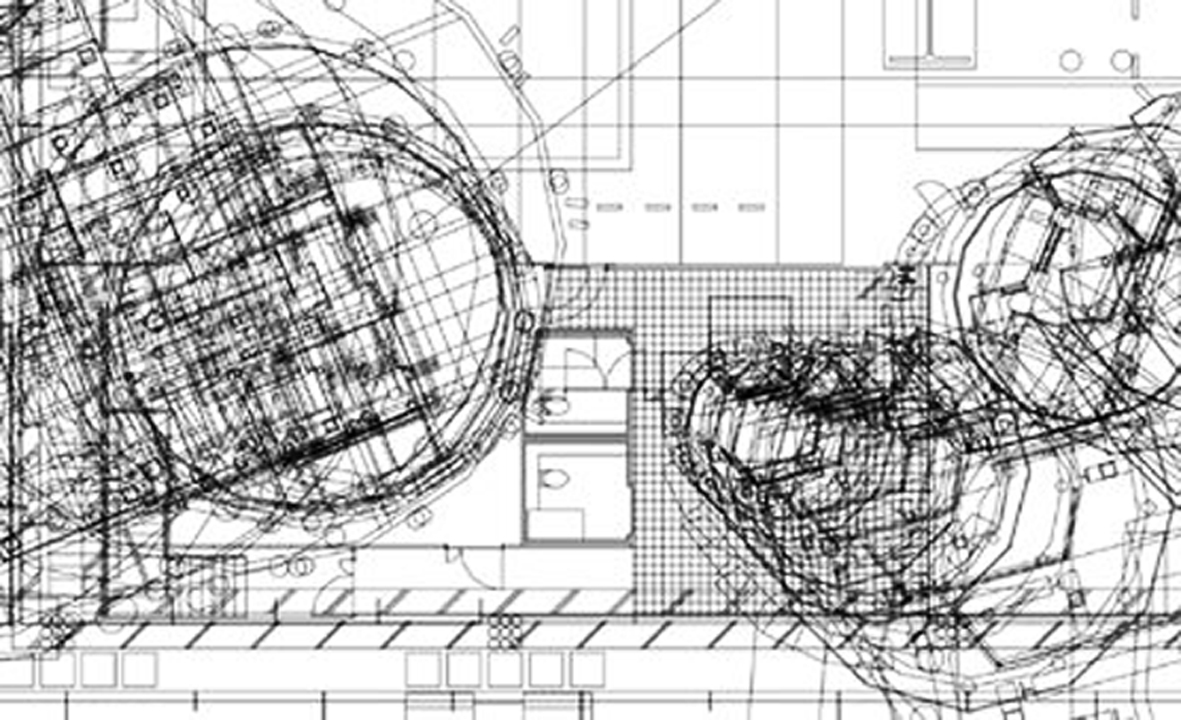
Yokohama Ferry Terminal – FOA Architects

Parametricism is introduced by Patrik Schumacher as a fresh approach to design with digital tools, where the ‘tools’ actually morph into a fully-fledged style, well suited to large scale urban planning as well as interior design.

According to Schumacher, this avant-garde style closes the transitional gap between the modernist/postmodernist, deconstructivist/minimalist era and present day, fulfilling most necessities due to its relevance in all scales. Its adaptability is also highlighted by its morphological nature and therefore superior capacity to articulate programmatic complexity.

Due to the increasing demands of the socio-economic state nowadays, ‘retooling’ was a necessary step. The increasing demand can be addressed by a rich panoply of parametric techniques: animation, simulation, form-finding tools, parametric modeling and scripting.

With this palette of techniques architects across the world strive to solve systematically connected problems. The over and above aesthetic recognisability as well as the wide spread, long term consistency of shared design ambitions and problems could justify the enunciation of a ‘style’.

A further aspect of parametricism as a style are its ‘heuristics’, as Schumacher describes them. Positive and negative heuristics dictate the rules with which parametricism as a style is to be approached.  Avoidance of linear shapes (squares, triangles, etc) is key as well as pursuing paths of research, guiding principles and preferred techniques  (parametric), which allow the work to fast forward in one direction.

Therefore the deep relationality is able to further coordinate pragmatic concerns and articulate them with all their rich differentiations and relevant associations. Even though the increased relational and digital logics aid in complex tasks, the new ‘style’ fails to live up to its full potential. Schumacher is reacting to the present state of things in the form of binary ideas, however he is not exploring further, or even attempting to envision a future, rather preferring to develop parametricism as a reaction to current situations.

The envisioning of the Yokohama terminal in its existent form was almost impossible with analogue techniques. The ease of execution would have been greatly increased through parametric techniques.

The interconnection of public spaces, structure and the existing pier can be viewed as a complex relational problem, possibly solved by digital relation tools. Great emphasis was put on the interrelation of these aspects, creating smooth topological transformation. Even without computational techniques the continuity between its different levels as well as the existing elements was overcome elegantly.

Though parametric techniques were not used exclusively, seismic activity was analyzed, monitored and relayed into the design using parametric means, ensuring horizontal and vertical forces are absorbed, as well as overall structural correspondence.

The execution of the Yokohama terminal highlights the associativity between part to whole, articulating the interconnecting elements in an elegant simplified manner. However the potential for greater efficiency of implementation as well as heightened speed at which such a project could have been completed remains open. No doubt parametric techniques would have aided the design hugely.

I am interested in the potential parametricism has in the future when certain design constraints and possibilities which have not been discovered or explored yet, may surface. It is also interesting to ponder whether parametricsm in such cases would truly evolve into a style or remain more of a design tool.


Case Study: Yokohama Ferry Terminal

Case Text: Parametricism ‘A New Global Style’, by Patrik Schumacher

Picture reference: http://www.buildersmagazine.ro/uploads/articole/206_taiwan_tower_P02.jpg
Also posted in Philip Serif, Uncategorized | Comments closed

Architecture Machine_T5

PUZZLE22

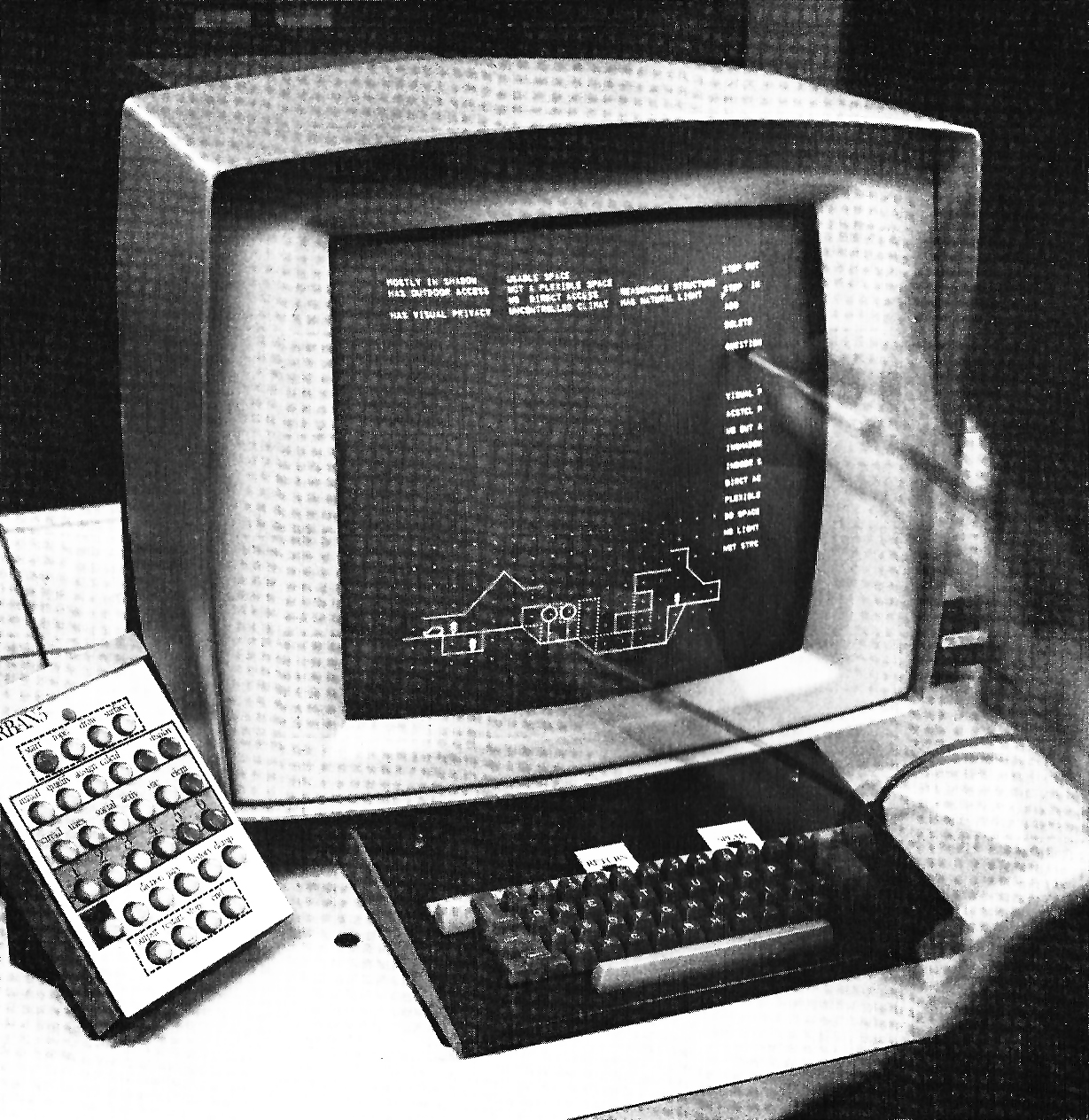
Image: http://openarchitectures.wordpress.com/2011/10/27/an-interview-with-nicholas-negroponte/


Nicholas Negroponte stated a very controversial review about the approach of machines. His dictum was indeed referring about the unsuccessful approach of architects, which are unable to handle large-scale problems and also ignore small-scale issues.  Otherwise, he suggest that in order to achieve environmental humanism is indispensable the use of machines, which is a highly contradictory and sets down the concept of a paradox.

The main five points that the author mentions about the characteristics that an architecture machine must have are the following: the heuristic mechanism, the rote apparatus, conditioning device, reward selector and forgetting convenience.  All this inputs allow the machine to “learn” by itself; but indeed, the machine does not learn or improve, it just increases its data base according to the information that the architect or designer puts on it.

It is a fact that a machine cannot be self-conscious, for the moment. Instead, it needs someone who can create a database, set all the inputs and give the commands. The dictum mentioned by the author is considerably far from reality and underestimate the role of architects by considering the relevance of the architecture machine far above from architects.

To consider that a machine can learn and evolve by itself is nowadays impossible; I personally believe that machines are tools handled by and for people´s benefits instead of considering that machines can actually replace real designers.

I truly believe that the relevance of machines nowadays is really important, due to the necessity of people to stay away the consumerism status that predominates today´s society. In that sense, I would like to research about the impact of domestic machinery and how can it help people to design and produce their own products.

Also posted in Juan Diego Ramirez Leon | Comments closed

DIGITAL LOGICS_T5

http-::thenextweb.com:wp-content:blogs.dir:1:files:2014:04:human-android


Reading text:
Toward a Theory of Architecture Machines – Nicholas Negroponte
Case study: Media-TIC, Barcelona – CLOUD 9 Architects

Nicholas Negroponte developed a theoretical framework on the need of machines to facilitate architecture. The “father” of the MIT wrote this article in 1969 where he describes that architects should join a partnership with architecture machines to create efficient architecture. At that time everything was created by hand and he revolutionary thought about the possibilities of machines to be self learning, self improving and adaptive. On the one hand he characterizes the architect as the teacher of the machine, but on the other hand he limits the work of an architect to minimum by suggesting a master machine, which can provide all necessary information to the other machines.

In my opinion machines should always remain tools for humans in order to make their work more efficient but not to do the whole work for them. A machine should support you, not decide for you. I admire his revolutionary thinking of advanced architecture at that time where even personal computers were not introduced but I think he exaggerates the role of a machine. His visionary machines have too much power and cannot be controlled. He portrays the creation of helping machines in a positive way but never describes how they their learning process could be controlled. If they can learn by senses, (see ‘’seeing machine’’) and to self improve, he is no longer talking of producing tools but a completely new race with a master machine as their main head. Architecture will be created on the “assembly line” and every design would be standardized. In that case, do we still talk about architecture? Machines as tools can help us research in terms of energy efficiency and sustainability and contribute to the protection of the environment and help us develop new strategies and materials to preserve our nature.

Take for example the Media-TIC, which was built in Barcelona in 2009 by CLOUD 9 Architects. This is a perfect example of an energy efficient building. Media-TIC was digitally designed and built using CAD-CAM processes (machines as tools). The 38-m high Media-TIC houses a photovoltaic cover on the roof. Rainwater is collected in a tank to cover the circulation of the building’s wastewater. All the facades of Media-TIC differently use the ETFE cladding, which allow savings of up to 20% of cooling costs. Media-TIC prevents the release of 114 tons CO2 into the atmosphere and is able to produce the same amount of electricity generated by 700 photovoltaic captors. The Media-TIC is just an example of sustainable architecture and we are heading the right way to create self-sufficient buildings, which will be the answer of futuristic architecture. The building industry has the biggest potential in being a leader in the energy management field. An architect does not need anything to do the entire work for him; he needs the right tools to make his research, his design and his final product the most efficient to help preserving our nature in order to save our planet.

In a future research I would like to realize how far we could probably go with technology and would it be still safe for us. Is it really possible to create self-learning machines? I am really concerned with the fact that a misuse of such an advanced self-improving machines will end in controlling us. Is this digital-era really helping us to live a better life or is it separating us from the real world? I am also really worried for the younger generation, which will completely lose touch with the reality.

Image: http-//thenextweb.com/wp-content/blogs.dir/1/files/2014/04/human-android


Also posted in Borislav Schalev, Uncategorized | Comments closed

DIGITAL LOGIC_T4

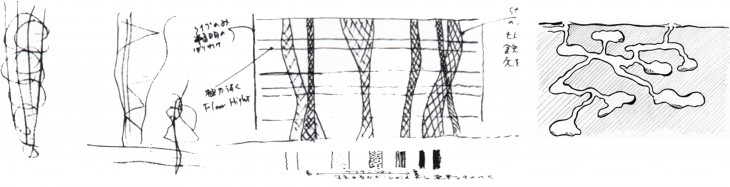
TOYO ITO - SENDAI MEDIATHEQUE TOYO ITO - SENDAI MEDIATHEQUE & STEVEN JHON –EMERGENCE

Case Study :  SENDAI MEDIATHEQUE  BY  ARCHITECT TOYO ITO + STRUCTURAL ENG. MATSURO SASAKI 

Reading Text : EMERGENCE THE CONNECTED LIVES OF ANTS, BRAINS, CITIES AND SOFTWARE  BY STEVEN JHON

.

Referent Image: www.artspace.org.nz/exhibitions/2001/blurringarchitecture.asp

.

In the above Mediatheque Sendai and The Connected lives of Ants both naturally developed because express components: Fluidity, Order Unstable and Transparent both designs and try to prolong the inside outwards emphasizing the continuity of the space.

Sendai Mediatheque is built and consists of  3 main elements: plate, pipe, and skin; The dwellings or places of life of ants naturally developed into huge amounts of solid ground. Both filters and communications develop from the inside to the outside creating the connection. Sendai trying to translate the conditions of society in the architecture using digital media and inhabit ants more naturally, where there is no reason, no logic, only the will of intuition. The most important thing is that both are able to develop their buildings in a collective way as a colonial system that plays an essential role (some can not do), but it (the participation of all in coordination can accomplish anything), large jobs or buildings.

This is a new concept in architecture that expresses much fluidity, lightness, like seaweed moving freely; image or sketches was poetic, far from any known reality, using dimensions, codes, numbers, position, displacement, and utilization of software. This is a project that is parametric and made parametrically.

The ants inhabit is a concept that is made of wild type with lots of places made in huge amounts of solid ground, for its swarm logic is a dominant force, behavior emerge from colonies with constant communication and interaction is the key to understanding the overall behavior evident achievements of its great buildings of its proportions; exploring their spaces without predefined orders. This is a clear sign that these buildings are habitat can see it’s a 100% parametric project, but with the difference that has not been done parametrically.


In conclusion I reached a confirmation of the above projects there today that are parametric and conducted parametrically and others like constructions that have been developed since ancient times, it can be observed that are parametric but are not made or constructed parametrically (no logic, no reason, are free as the wind and flow like a natural organism but is there the ability to achieve and suggest how they can do.


Also posted in Luis Angello Coarite Asencio | Tagged , | Comments closed

Material Behavior in Deleuze and SAANA

Stuttgart

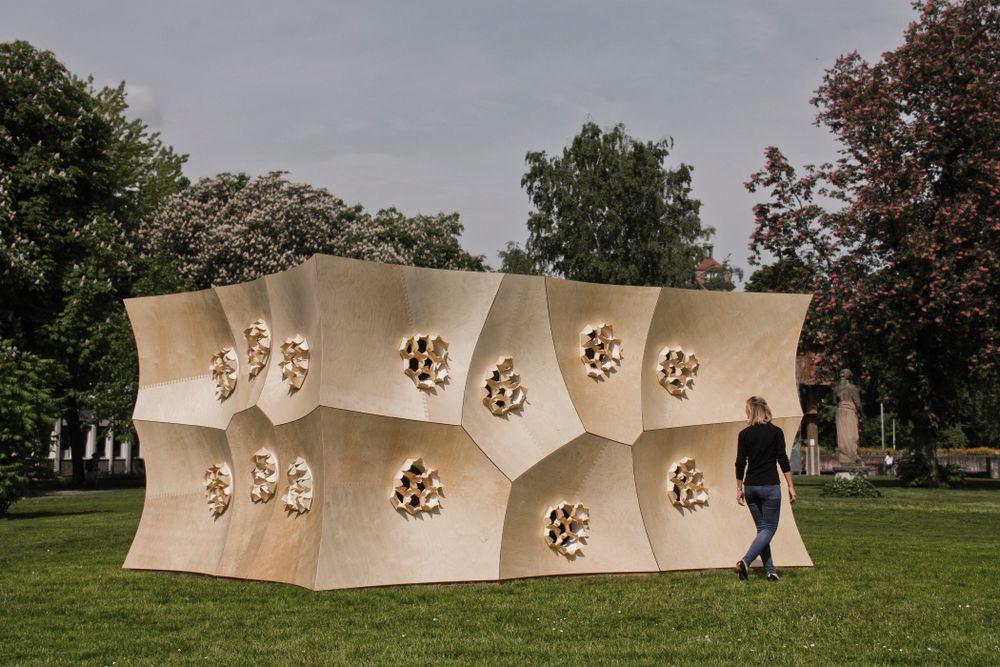
Photo: HygroSkin-Meteorosensitive Pavilion, by Achim Menges (2012)

http://www10.aeccafe.com/blogs/arch-showcase/2013/09/17/hygroskin-meteorosensitive-pavilion-in-orleans-france-by-achim-menges-architect/

Read More »

Also posted in Orion Gorrao Moreira Campos, Uncategorized | Tagged , , , | Comments closed