Category Archives: Students

Authors

Atmosphere: Tangible or Intangible?

Foto by:  CSABA DIGLICS, June 15, 2012

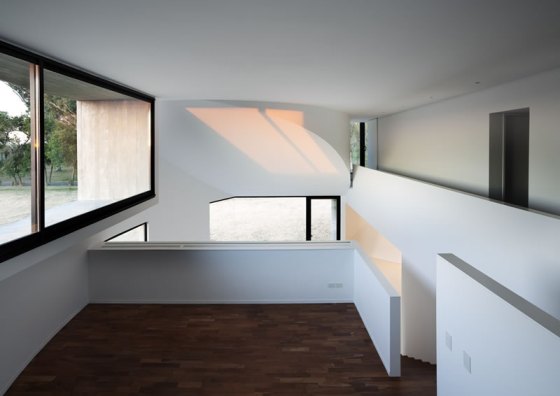
Case Study: “View House” by: Diego Arraigada and Johnston Marklee

Reading: “The Architecture of Atmoshpere” by: Mark Wigley


Atmosphere: Tangible or Intangible?

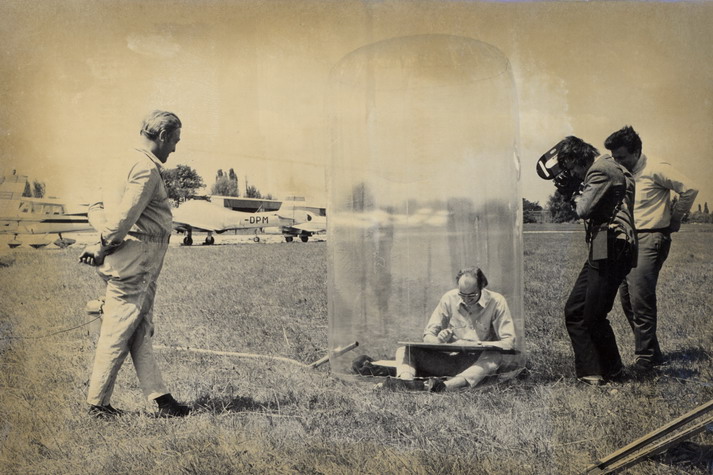
Is an atmosphere something that architects can construct? Is it what comes just after the physical construction and surrounds the building? Is it some sensuous emission of intangible effects? All of this doubts come to my mind when reading “The Architecture of Atmosphere” by Mark Wigley, in which he affirms that the goal of architects to control impalpable elements is a never-ending attempt. As architects we can envision projects that take into account and analyze most of the elements that are in the environment, to connect the changing climates with the material object, creating a relation between the atmosphere and the building. However Wigley expresses that trying to control the atmosphere through architecture is just a fragile illusion.

Read More »

Also posted in Stephanie Farah Carbonell, Uncategorized | Tagged , , , , , | Comments closed

RELATIONAL LOGICS_T3


View House by Gustavo Frittegotto.

Case study: View House, by Diego Arraigada and Johnston Marklee

Text: The architecture of atmosphere, by Mark Wigley

Read More »

Also posted in Wilton Neves | Tagged , , , , , | Comments closed

Relational Logics

3.114

Case Study : STUDIOHOUSE-F451

Text: The Conditioned Outdoor Room-BERNARD RUDOFSKY

The contemporary world, perpetually urbanizing and transforming as it is, calls for a holistic approach to the pertinent issue of the relationship between the natural and the built environment by architects and urban planners. No one can deny that the recent trends and developments in technology have resulted in complex relational logics that connect nature with the urban context.

Studio house by F451arquitectura aims to explore the connections between architecture and landscape, particularly by merging the site’s landscape with architectural design, forming positional, metaphorical and environmental relations between them. The landscape is integrated with the house, as it’s different volumes unfold from the sloped topography in different ways; alignment with the terrain in the middle, emerging from it in the volume of the studio and detaching from it in the side of the house. Nevertheless, this integration appears to be investigated in the design only in a spatial/visual manner rather than a functional one (e.g. absence of patio). With reference to the metaphorical relational logic, Studio house develops a hybrid design that is based on the combination of the modern house typology and the industrial house typology, which is accomplished by spatially distributing the different functions that it accommodates (house, studio, guest house, garage e.tc.) in autonomous, but interrelated volumes. In addition to this, the design implements energy efficiency solutions, through  a green roofed corridor, which provides the structure with  thermal insulation to the structure, as well as with double orientation, lighting and ventilation to  all featured spaces­.

The relational logics formed between the natural and artificial environment are also evident in The Conditioned Outdoor Room by Bernard Rudofsky. In this text the author underlines the dangerous trend of disconnecting the living environment from nature. People have always attempted to conquer natural phenomena, by creating a climate controlled inner environment that is almost unattached to the natural environment. Using various examples of the architectural elements of the garden  and in analogy to the Pompeii ruins, the author indicates the urgent need to shift the architectural and climatic focus on the outdoor environment. Thus, the courtyard archetype calls for a revision in the contemporary urban environment.

As a future research, I would be highly interested in researching the new relational logics that are established through advanced architecture, as well as exploring these in a broader scale, focusing on the notion of glocal, a new term that refers to the integration of the global and local environmental aspects in architecture.

Also posted in Eirini Aikaterini Papakonstantinou | Tagged | Comments closed

Relation Logics / T5

20_Never_Neverland

Photo credits:http://www.archdaily.com/38196/never-never-land-house-andres-jaque-arquitectos/

Case Study_Never Never Land House /Andres Jaque Architects

Reading_Form and Function Follow Climate/Philippe Rahma

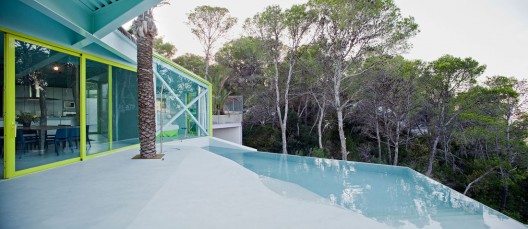
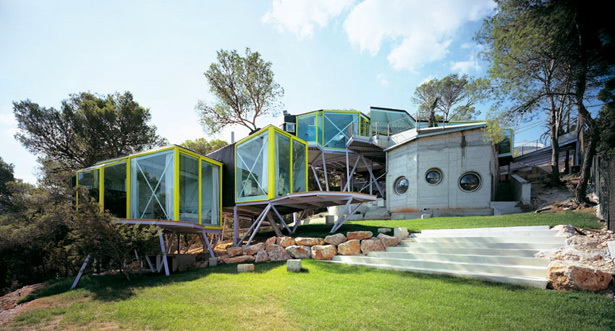
Never Never Land House  was built on a 1300 square meter allotment in the Cala Vadella Valley of Ibiza. Home explores the roll played by architecture, as a practice of technological restitution of social relations, combination of intimate sphere with the sphere of collective action. Based on hedonist tradition of suburban swimming pools in Santa Monica and “extreme happiness” related to electronic music and synthetic  drug consumption. In order to maintain the natural environment  80 percent of the house has been raised on the pillars above the ground.  Analyzing the house with  relational logic we can notice some similarities with: 1.Metaphorphical Logic-columns as branches, solid form as illustration of crown 2.Environmental-system by energy 3.Positional-trees organized as architecture, included in the house as a part of composition.

It is generally known that architecture is the art of designing, planning, and construction. Product architecture or architectural workers reflected the thinking of its creator, architect of the ideas and concepts of architecture, able to understand the priorities  in achieving the goal. However, certain parts of architectural achievement depends on economic opportunities and social consciousness. Looking at the history, we can say that the form and function changed depending on the culture and the period in which they arise. Each architectural epochs as result had certain types in construction. One of the main debates throughout the history of architecture was whether focusing on the form or function.As  we all know the phrase where “Form Follows Function” (Louis Sullivan) and “Function Follows Form” (Louis Kahn).  In the case of whether the form or function of the essence of architectural work a little neglected the fact that architecture is based on the development of the technique. In view of the need to have and important determinants of self-sustaining development. Magical words are present in the architecture : energy efficiency and renewable energy.

As an example we can take Switzerland where environmental solutions focused on increasing comfort and reducing non-renewable energy sources. The Minergie standard is registered quality label for new and refurbished building. Comfort is the central theme: the comfort of the users living or working in the building. This level of comfort is made possible for high-quality building envelopes and the systematic renewal of air . Specific energy consumption is used as the main indicator to quantify the required building quality. Architecture should be seen as a variable system that is adapted to climate, time, day or night, season, space, and used in accordance with our needs and desires. We should not allow ourselves to be functional and symbolic constraints preclude the free use and interpretation. Openness towards unexplored dimensions where the architect experimenting with time, space, matter is important.
Houses of the old neighborhoods of Baghdad, has interior spaces that varied in temperature. That is good example for climate quality rather than function. Aim is actualizing relationship between architecture and climate, natural or artificial in the era of sustainable development. If we take into account the typology of the building, there are many places for housing whose functions are obsolete, not in line with today’s lifestyle. Places in which we lost ability to live. Robbe Grillet indeed denounced “the tyranny of significations”.  Its better to present physical climatic, geographic and physiological spaces and time. Architecture replaces functional and symbolic constraints with freedom of use and interpretation.

As conclusion I can say that in the design of the house more attention should have been devoted to coordinate form and function parameters, other polluting energy spatiotemporal.
House is more based on personal expression and needs, in this case the intended fleeting romance and everyday sunset parties, thus not based on technical information.
Nature has been interpreted through architecture for centuries in various ways .In my opinion architecture would not be perceived as a form and function  individually, their primary issue is not the design of spatial boundaries, and not the space itself, its main concern is human life. Therefore, our task is not to adapt existing markets as a key institution of modern society, but we’re working on innovation. The form and function it is necessary to include together in time, place, new technology because  we are who advocate new techniques, shapes and materials. Our ability to establish the value of the structure is proportional to our ability to recognize and use the individual properties, mutual relations, as well as the integrity of the structure. Any increase in the number of attributes which define the models increases directly and our creative ability. Of experimentation, research, use of new materials, acquiring new knowledge, depending on the time and space  these attributes are increasing daily.

Attributes that I mentioned can be fairly subjective, dependent on the personal experience of architecture. They can be ambient, decorative, ecological, economic, functional, ethical, ideological, cultural, commercial, etc. From all of this it is necessary to extract the objective attributes, which will contribute to the development of technology, the improvement of human life and comfort, interaction with nature. So I was interested in exploring objective parameters that influence on development of new technologies whose list is constantly supplemented by acquiring new knowledge and experimentation.



Also posted in Tamara Ivaovic | Tagged , , | Comments closed

Relational Logics-T5

1255719324-0909-ja-never-neverland-011-528x229

photo credits: http://www.archdaily.com/38196/never-never-land-house-andres-jaque-arquitectos/

Case Study_ Never Never Land / Andres Jaque Architects

Reading_ Form and Function Follow Climate / Philippe Rahm

Since ancient times, nature was an integral part of the architecture. Until today, that fact has not changed in terms of the interplay of nature and architecture, but the time has changed and is changing the way how humans, architects perceive the specified kind of relation. In advanced architecture of the 21st Century trees play a very sensitive role in the design proces, to the extent that it becomes part of the architectural ensemble.

Never Never Land house, located in Ibiza (Spain), was designed according to mentioned interplay by respecting  four guiding decisions and logics: minimum removal of existing vegetation (trees, bushes); lifting more than 80% of the building mass on piles, to prevent irritation of the soil as much as possible; grouping of all systems (for filtering and processing waste as well as water tank), that could cause spills into the subsoil, into a reinforced concrete vessel; reusing  part of the soil, that removes during the construction of the house, in a manner that the removed substrate incorporates in the building (in combination with water-retaining gelatine) allowing  the growth of plants and animals in the future. The house was imagined to depict the archipelago of islands where it was located, where each part of the house represents one of the islands. Interaction with own desires is what makes this house very provocative, even if the the whole idea is very personal architect’s vision and experience.

The mentioned fusion between architecture and its environment, as well as architecture which is supposed to reflect our desires and to be adaptable in terms of environment, weather and seasons, is very present in Phillipe Rahm’s text “Form and Function Follow Climate”, where the author primarily draws attention to the sustainable development as a phenomenon that affects invisible building structure, like ventilation and heating systems, emphasizing the problem of greenhouse gases from fossil fuels. Rahm sees sustainability as “reduction of building’s energy consumption” what requires modifications of architectural form and function. In addition, the author tends to reconcile two very different, conflicting theories. On one side is Louis Sullivan’s “form follows function” where he challenged symbolic and decorative status of architecture, defining it as an expression of programme. On the other side is quite the opposite Louis Kahn’s “function follows form” where he criticises Sullivan’s statement towards needs and activities which were deemed to be changed, by proposing a system of hierarchies where architecture was independent of the programme. Following these differences in attitudes, Rahm suggests the idea of architecture  that would spontaneously merge form and function in response to climate and which could be adapted according to seasons, weather conditions, as well as new functions and unexpected forms.

Personally, this interplay between architecture and climate I define as part of “Bioclimatic architecture” in the area of sustainable development, where i would like to pay special attention and explore modern flows of interpolating architecture with the environment, in terms of their interaction.

Also posted in Igor Cegar | Tagged , , , , , | Comments closed