Category Archives: Students
T1_WATERCUBE & ON GROWTH AND FORM
Also posted in Nohelia Gonzalez, Uncategorized Comments closed
Digital Logics- On growth and form

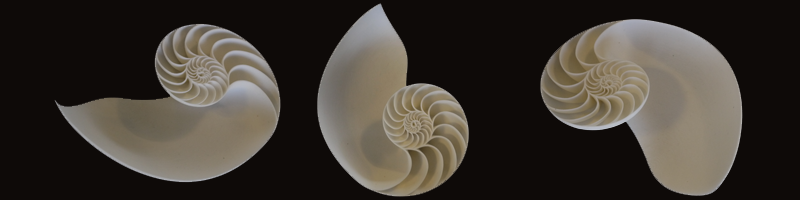
Thompson wrote On Growth and form in the maturity of a career that lay somewhat outside the mainstream of the biological sciences of his day. His writings were a large contribution for the study of morphology. On Growth and Form is essentially an attempt to establish a concept of organic form based upon the physical and mathematical laws governing the development and function of organisms. He demonstrates in this chapter that how organic forms once put in a Cartesian grid can change forms in the same species and how this method could be used to find missing parts in the series of relative species
During the debate in the class we found the book is more of a concept and basically starts with the theory of transformation and is solidly based upon the laws of Newtonian Physics. All the experiments D’Arcy conducted were in 2D and not in 3D and gives a mathematical approach to the biological forms. He tries to show how the relationship between similar species is still there but changing their coordinates and the position of the parts changes. It’s a form finding method found over 100 years ago and gives us an idea of multiplicity during that era. Topology has been explained as a concept here with no real results. It’s a relation of a part to a whole. Read More
Also posted in Ninada Bhaktavatsala Kashyap Tagged 2014, beijing, maa01, ninada, on growth and form, thompson d'arcy, topology, watercube Comments closed
THE CLOUD AND THE NET
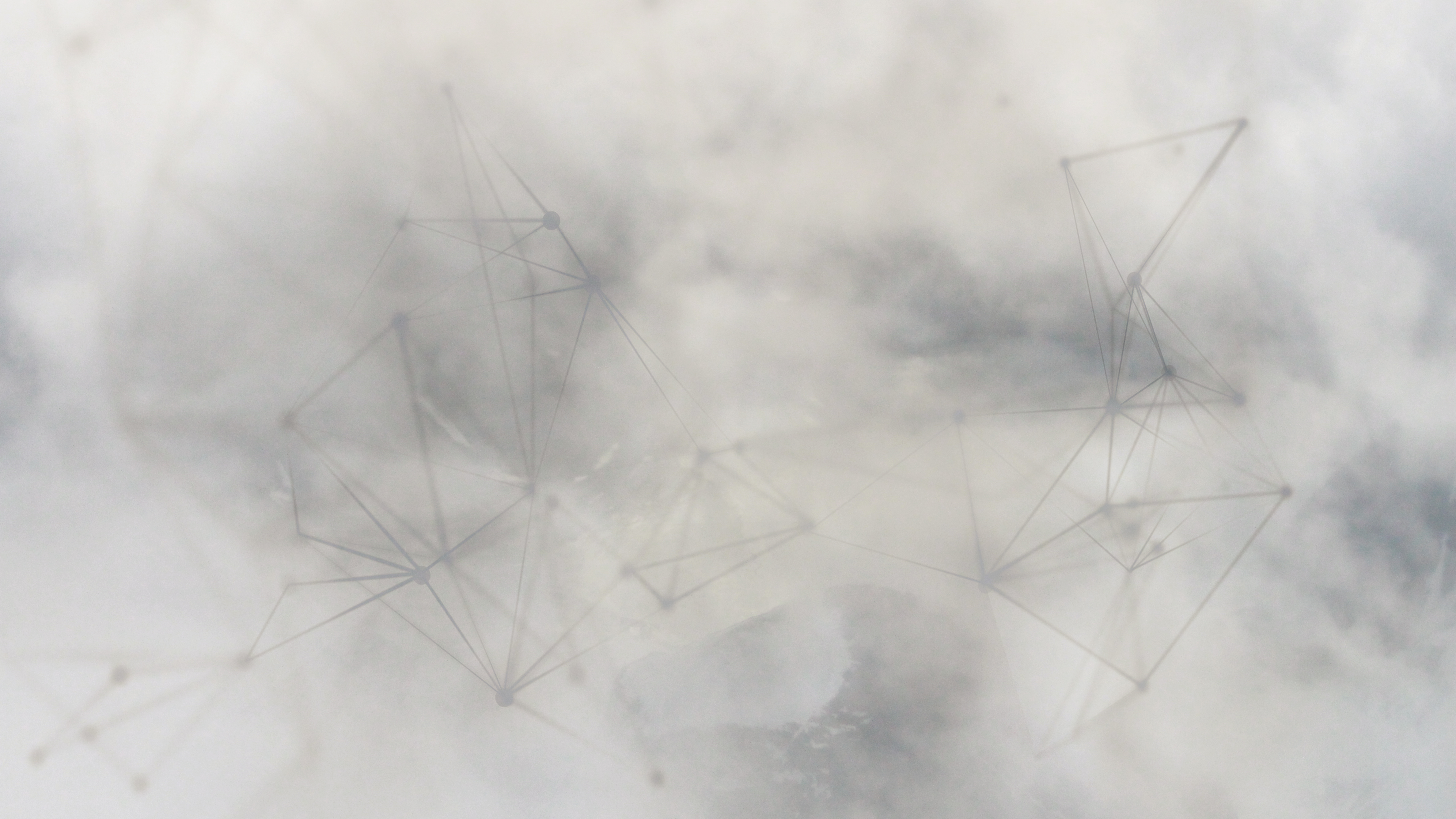
“Upon entering the fog mass, visual and acoustic references is erased, leaving only an optical white-out and the white-noise of pulsing nozzles. Blur is an anti-spectacle. Contrary to immersive environments that strive for high-definition visual fidelity with ever-greater technical virtuosity, Blur is decidedly low-definition: there is nothing to see but our dependence on vision itself.”
Diller Scofidio
Also posted in Matteo Silverio Tagged deleuze, diller scofidio, iaac, maa01, maite bravo Comments closed
Difuminating the limits
 DIGITAL LOGICS | Assignment | T3
Reading: Thousand Plateaus -Rhizome | Deleuze- Guattari
Case study: Blur Building | Diller Scofidio – Renfro
Image collage for academic assignment: Javier F. Ponce
Difuminating the limits
A Thousand Plateaus :Capitalism and Schizophrenia, by Deleuze and Guattari, was written in 1980 in a non-linear way which allows the reader to move among plateaus in any specific order. Plateaus propose self vibrating regions of intensities. A Plateau is always in the middle, not at the beginning or the end.
The authors describe some types of logics, like the tree-thinker / central trunk logic (vertical, territorial, hierarchical), the Radicle system (fascicular root, indefinite multiplicity of secondary roots, but the root’s unity subsists) and the Rhizome. The latter can be illustrated as a vegetable which propagates, an acentered system which spawns and proliferates. A Rhizome is made of Plateaus. We can say that the Rhizome is inherently multiple, it has no center, its horizontal (avoiding vertical or linear connections) , it just proliferates, it is not genetical, all within a Nomadic non-territorial approach which opens endless possibilities.
They also talked about the following principles:
- Principles of connection and heterogeneity: any point of a rhizome can be connected to anything other, and must be.
- Principle of multiplicity:Multiplicities are rhizomatic
- Principle of asignifying rupture: A rhizome may be broken..against the oversignifying breaks separating structures or cutting across a single structure.
- Principle of cartography and decalcomania: a rhizome is not amenable to any structural or generative model. It is a stranger to any idea of genetic axis or deep structure.
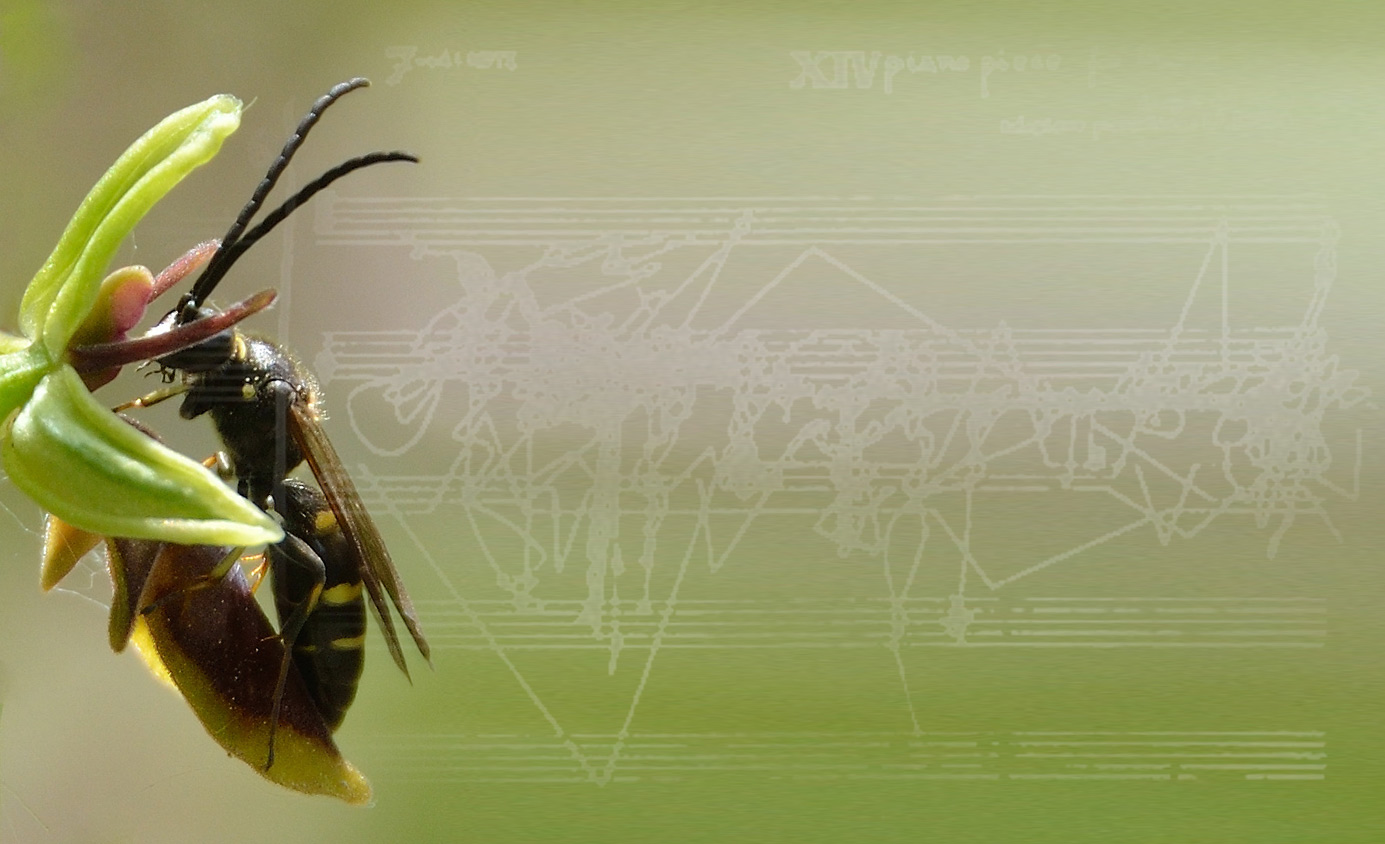
As in the example of the Orchid and the Wasp, the orchid forms an image and the wasp reterritorializes on that image, they form a Rhizome.
While discussing the case study and the reading in class, a few analogies came to my mind: Just as the Blur building difuminate the limits of “the container” , allowing the mist (fog-mass) to expand in the context , the Rhizome proliferates, it has no limits and it is not contained within a linear structure. When entering the Blur building, the person experience a lack of all visual and acoustical references, the visitor is not sure what to expect. The same happens in a rhizomatic system, in which different unexpected inputs from different sources can emerge from any direction, allowing for new relationships and multiplicities. Internet can be a good example of a rhizomatic system where information can be shared form endless different sources.
Regarding my personal research or line of inquiry, I’ve been attracted by self-sufficiency, de-centralized systems and non hierarchical structures related to the way people interact and how architecture can play a significant role in this type of logics. As an example, a decentralized energy network based on the contribution of the neighbors to the energy system can be far more efficient and sustainable, if managed properly, than the current centralized scheme, where someone produces and others consume, at almost any price…I’ll like to kep on exploring the Self-sufficient agenda and the way our profession can be a major input.
Also posted in Jose Javier Fernandez Ponce Tagged blur building, difuminating, digital logics, rhizome, thousand plateaus Comments closed
WATER CUBE – Beijing National Aquatics Center – 2008
WATER CUBE
Beijing National Aquatics Center – 2008
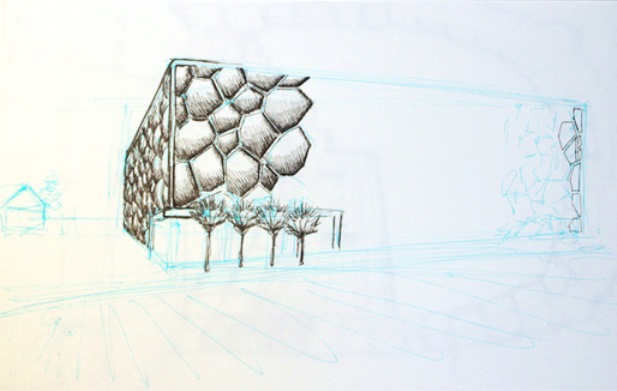
The water cube is an aquatic center won in a competition by PTW architects and built for the swimming competitions of the 2008 summer Olympics. The ecologically friendly water cube maximized social and economic standards. One of the concepts the architects used was to build on natural process of using soap bubbles by building with Weaire-Phelan structure. When two bubbles meet, they form a flat angle to build on. They then unified the angle at 105 degrees.
The second concept is using the square shape which symbolizes the Chinese culture, where the cube signifies earth and the circle of the stadium represents Heaven. However since all bubble are at the same angle hence similar, the whole volume was rotated before it was sliced into a square in order to get a façade with bubbles shapes of different size depending of the cut line position. That is why it looks random while it actually is very regular. The architects and engineers used the state of art technology and materials to get an energy efficient building. The 100,000 sq. ETFE plastic used is the largest clad structure in the world. It is very thin and recognized for its light weight characteristics – it weighs 1% of the weight of glass. As well it allows natural light to penetrate requiring 55% less artificial light. By having a double sheet design, it creates an opaque insulating skin which captures solar energy to heat the interior and the pools. This makes it an energy efficient building. As well, the double sheet concept creates fluidity and continuity between the interior and exterior. Yet the most impressing feature of ETFE is that when it catches fire, it simply melts away instead of burning and spreading the fire, and it instantly stops when the fire is put away. It is also water efficient since it harvests rain water and has a backwash system, recycles and filtrates allowing the building to require 90% less potable water than a typical construction. The notion of performance is very important in this building; the nodes and connections used resemble a tinker toy and are built in a way to make the building the most earthquake resistant structure known.
I am interested in understanding and experimenting with the same systematic way that these architects had. Researching with materials, building advanced structures, and implementing sustainable and efficient solutions all together would be a great win in my opinion. By moving towards a sustainable architecture, spreading the word by showing diagrams of efficiency over time and try to apply it in new constructions, even in old ones, when possible, would make the world a better place.