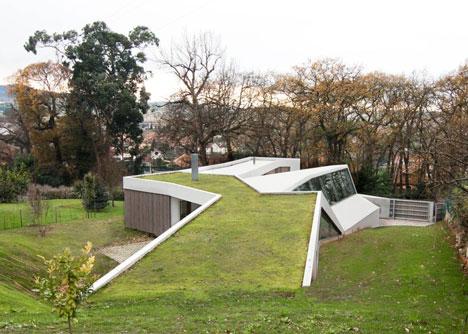
Case study: Wall House – FAR Frohn & Rojas
Text assignment: Primitive Future – Sou Fujimoto
Architecture is multifaceted and has relational logics. Sometimes, to understand it, we need to move the border, look at an unusual angle. It is not just about envelope and constructions, it is much deeper. To understand this I study the following theory.
In “Primitive Future” Sou Fujimoto erases traditional boundaries between house and city, inside and outside. The most interesting part lie in-between them, which we did not notice before.
Comparing nest and cave he shows that something undeveloped is always more exciting than those, which are known from the beginning to the end. Nest, which was originally built for housing and cave, which also can be used for it but from the beginning had another purpose.
To watch on things in a different angle is one of the best way to explore something new. If we take out staves from musical notation it will not brake the structure. Conversely, we can see completely new geometry, which was not notice before.
Architectural object can be incredibly complex in its structure, but its meaning should be clear even to a child. As all the grandeur of the forest can be schematically illustrated by the example of one tree.
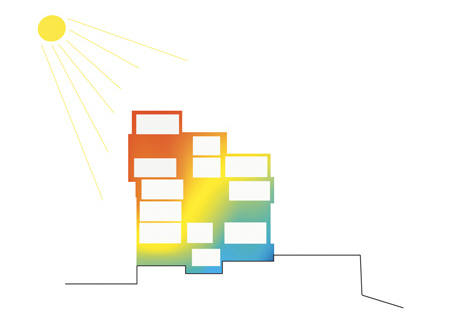
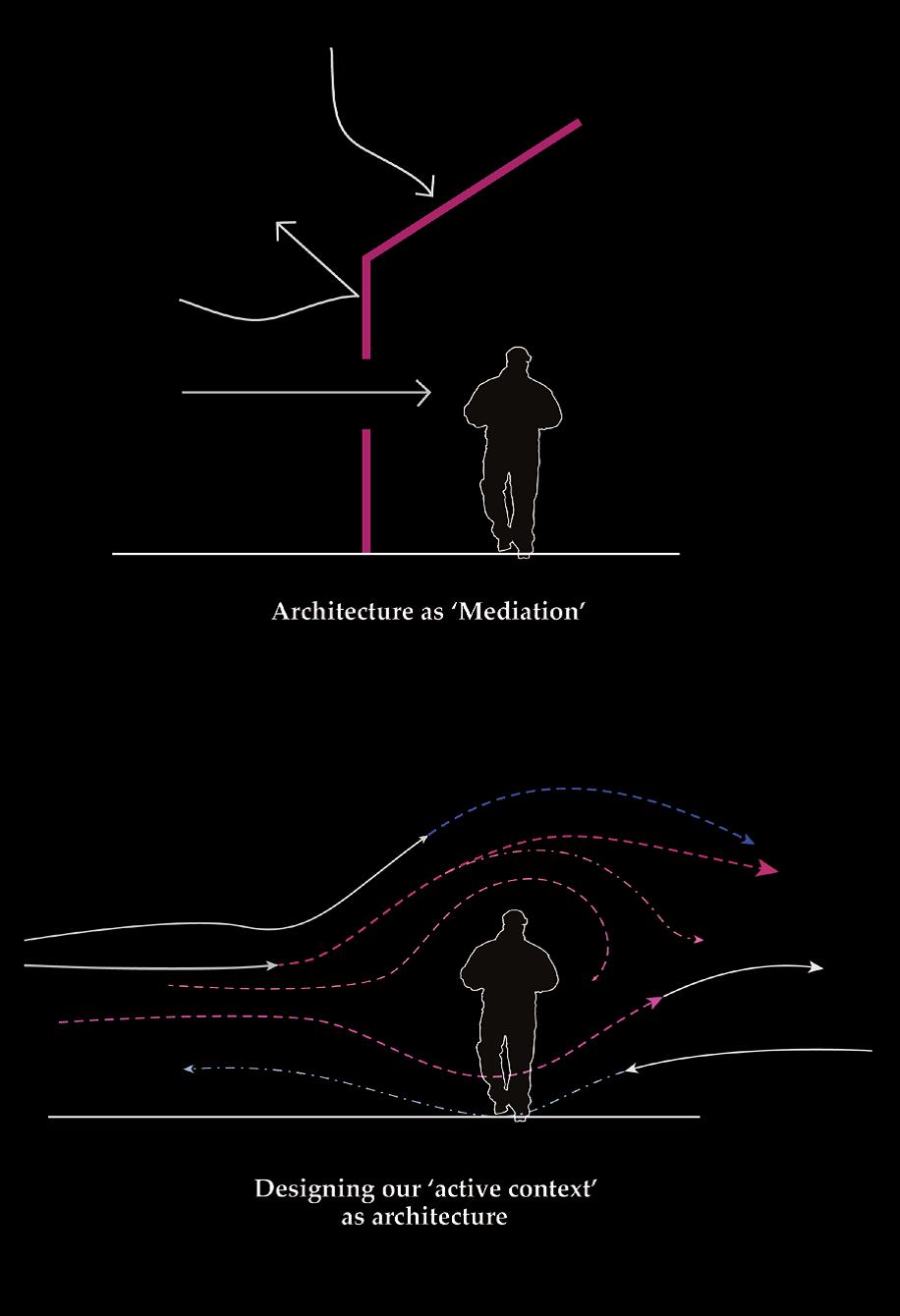
In my opinion, Fujimotos theory can be seen in Wall House, projected by Frohn & Rojes. This is not just a simple house, not a box with levels, it can “enable specific ecologies to develop”. Using different materials and working with shape, they created another space, which is not a house already, but also not, yet an outdoor. According to Fujimoto, it is something between 0 and 1, black and white, between house and environment. Gradation which is more complex in its structure.
Inspired by analyzed readings, I would like to research more properly about merging architecture and nature. How else can we blur boundaries between them? In my mind there is no exact answer as there are plenty interesting variations which are quite different from each other. I wish to search all possible solutions and may be summarized them I can find out how to make this interaction possible in another way.
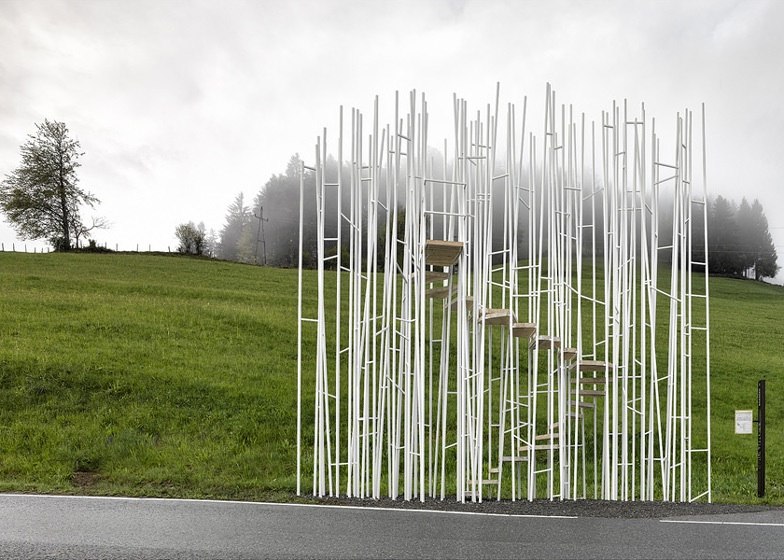
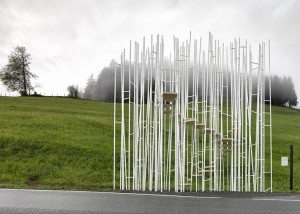
Picture: Sou Fujimoto’s Bus Stop in Austria
http://www.spoon-tamago.com/2014/05/15/sou-fujimotos-bus-stop-in-austria-will-make-you-feel-like-youre-on-stilts/