Category Archives: Students

Authors

Digital Logics in Advanced Architecture

Termite mound

Maybe a lot of the neurons in our brains are not just capable but, if you like, motivated to be more adventurous, more exploratory or risky in the way they comport themselves, in the way they live their lives. They’re struggling amongst themselves with each other for influence, just for staying alive, and there’s competition going on between individual neurons. As soon as that happens, you have room for cooperation to create alliances, and I suspect that a more free-wheeling, anarchic organization is the secret of our greater capacities of creativity, imagination, thinking outside the box and all that, and the price we pay for it is our susceptibility to obsessions, mental illnesses, delusions and smaller problems.

          Daniel C. Dennet

Read More »

Also posted in Francesco Maria Massetti | Tagged , , , , , , , , , , , | Comments closed

A New Vernacular: Building with the Intangible

Architecture has traditionally existed in the static realm, built from solid-state materials arranged in a certain configuration to arrive at a particular form. Every building has a “climax form” – that is, the originally intended geometry. This form is assertive in its territorial control, unchanging in its aesthetic, and largely unresponsive to its environment. Such architectures come across as stable and definitive, but in reality they are quite frail, because any deviation from the climax form results in failure.

In his article “The Shape of Energy”, Sean Lally advocates for a new architecture that is based on “material energies”. We are constantly surrounded by different energies – thermodynamic, electromagnetic, acoustic, chemicals – and we take them for granted, but in reality the role which they play in our lives and in influencing our behaviours are just as, if not more important, than our concrete environment. Material energies create boundaries that are fluid and responsive, resulting in a vernacular that is intimately connected to both regional and climatic conditions.

So how would one apply these intangible energies? Unfortunately, while he brings up some very interesting points, Sean Lally has failed to address the practical application of his ideations. One cannot just take energy and build with it. Humans exist in the physical domain, and we do not have a physical grasp on energy. In order to use something as a building block, one must first gain an intimate understanding of the material at hand, and while we may have an intuitive sense of different energies since we are surrounded by and interact with them on a daily basis, we are a far cry from being able to control them, not to mention manipulate them for careful study and experimentation, and eventually incorporate them into our architectural realm.

What I find fascinating is the physical manifestation of energy. Every energy somehow influences the physical environment. Tree wells form because heat generated by trees melts the surrounding snow, and compass needles point north because of the Earth’s magnetic field. Paying attention to changes in the physical environment provides information about surrounding energies as well as changes in energy conditions. A person putting on a sweater might signify a drop in temperature, while the same person, now reading a book, moving from one room to another might suggest an increase in noise or a decrease in light in the former space. By observing such changes in our environment, one can gain much insight into the invisible forces that surround us.

Another compelling thought is that architecture based on material energies would be able to adapt almost instantaneously to changes in the environment or in social programming. Through a feedback relationship between material energies and existing climatic context, an active dialogue would emerge between a building’s environment and its building blocks, with architecture that can either “dissipate on command” or respond accordingly in its shape and configuration. Of course, such a fluid reality is still far away.

It is interesting to view Sou Fujimoto’s House N in light of material energies. The house itself is purist and minimalistic, and in the physical domain it might seem like a purely spatial exercise – that is, three shells nested one inside the other. However, it is not just the walls that create an increased sense of privacy and separation as one moves deeper into the house; the change in light, sound, view planes, temperature, bodily sense of enclosure, etc. all contribute to the gradient that exists through the spaces.

I am of the strong opinion that so long as we do not transgress the physical nature of our corporeal existence, neither will our architecture. However, this does not mean that we cannot study and become more in tune with the forces that we cannot readily control, because we can certainly shape existing energies with solid-state building materials. An example that comes to mind is Philippe Rahm’s Convective Apartments, in which the architecture is designed according to the principle of convection. In this case, it is the existing thermal landscape that has shaped the resulting configuration of the building’s solid elements. Even though the architecture remains static and potentially iconic in its form, this is the first step towards an architecture informed by energy. I would be interested in examining such basic physical and climatic principles in order to generate systematic, vernacular designs that directly reflect their environmental conditions.
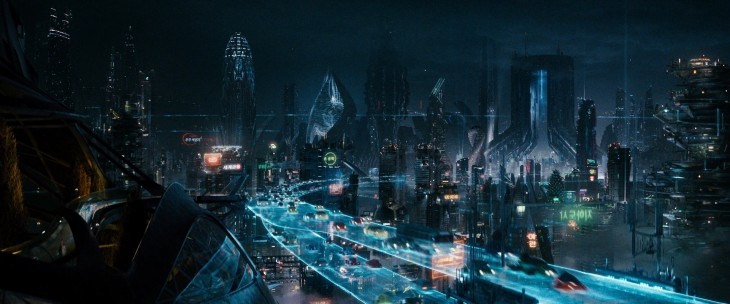
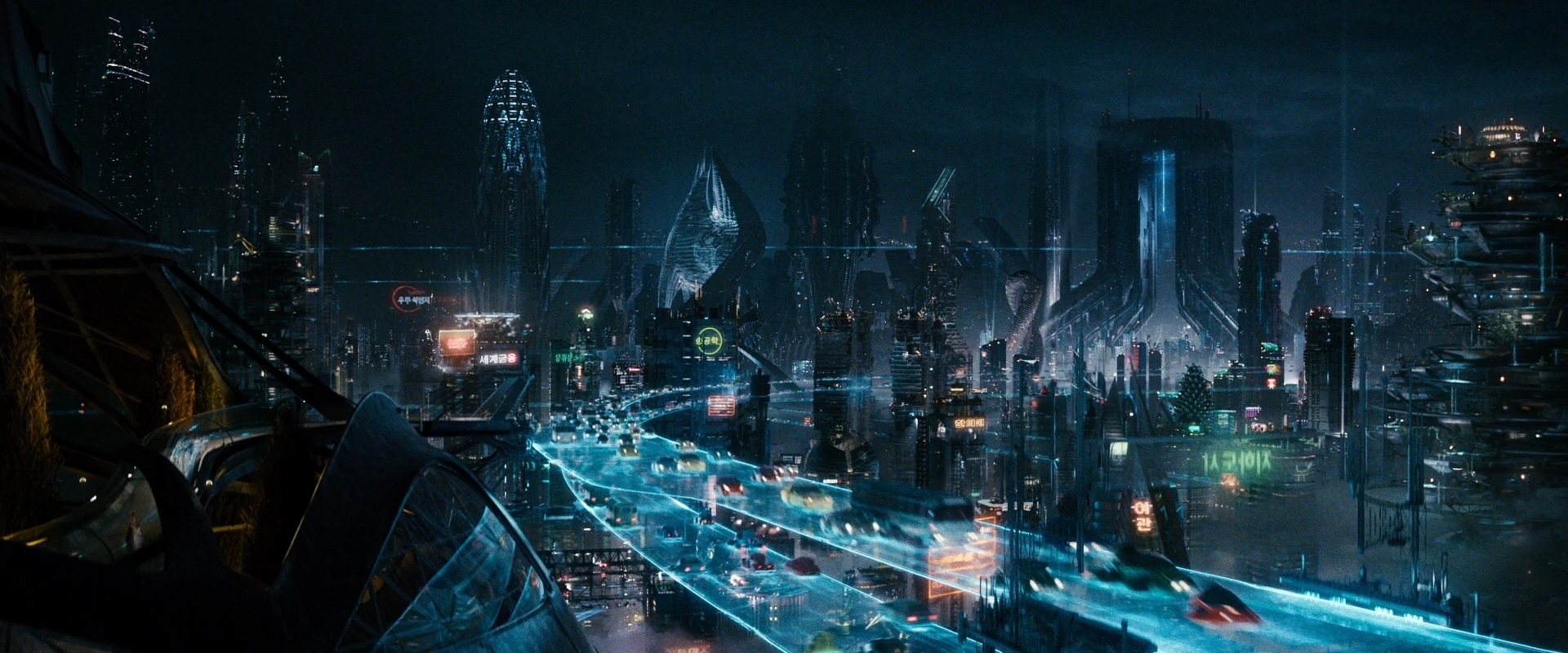
Neo-Seoul_Cloud-Atlas_The-Shape-of-Energy

http://cloudatlas.wikia.com/wiki/Neo_Seoul


Also posted in Samuel Shapiro | Tagged , , , , , , , , | Comments closed

RELATION LOGICS – T4


MORIYAMA HOUSE  And SANFORD KWINTER

 MORIYAMA HOUSE

The point of interconnection is to treat everything around us as nature is a source of living skills, history and accumulated forces trying to revitalize.

The idea that there is a human being as an actor in the middle of this big stage that is the nature and time. The relationships that occur in our environment is the place in which we live.

Because the architecture incorporates the thought, actions and concerns of the natural world and specifically within the circuits of Design Architectural Moriyama House seeks to integrate or interconnect the building interior and exterior it is natural or artificial  nature nature (created by man).

Alongside the building is surrounded by gardens outwards with some architectural spaces towards the sky and others on the horizon. Creating horizontal, vertical and filter visual communication between the inner world and the outer world building perforations. Today’s job to make flexible spaces like Moriyama’s  proposal  that  each  space be used independently or together and functions in a comfortable manner and can be used by different programs and architectural sectors can be selected as desired integration.

PLAN


At the same time the whole assembly is composed of several separate buildings each thus Dynamic have the freedom to use all residential buildings independently without  losing  their privacy.   These gaps  loom  importance,  because  it  is structured  and  what  communicating  spaces,  this  city  principle  considered  and  used  as  part  of  the  housing  and vegetation that helps to define and communicate spaces between the house and outside.

Creating an inner world that they can enjoy various spaces and lifestyles. Generating a building adaptability   and  can last over time. This makes it possible to develop and experiment with  new ways of understanding community housing where there are numerous Public Private contrasts Interior-Exterior and Unit-All. On the other hand it has  to  do with digital  information, everything is connected and integrated and  often talk we do parametric.


E

“YOU CAN SEE PARAMETRIC, FEEL AND RECEIVE, BUT IT IS NOT”

As  the  architecture  and  all  the  cultures  that  have  formed and consist of experimental changes in the world and the establishment   of   a   different   order   each   time   and   all   are    modifiable   as    a   form    of    natural    knowledge.

  I  HAVE  THE  CONVICTION  OF   RESEARCH  ON   PARAMETRIC   AND   NON-PARAMETRIC   ARCHITECTURE.      MULTIPLE  ORDER  TO  UNDERSTAND  THEIR  SYSTEMS  AND   KNOWLEDGE OF THIS SYSTEM. THEREFORE UNDERSTAND  WHAT IS  PARAMETRIC,  YOU CAN SEE  AND  WHAT  IS NONPARAMETRIC,  WHAT  YOU  CAN NOT SEE .

E2


Also posted in Luis Angello Coarite Asencio, Uncategorized | Comments closed

Relational Logics | T3

http://amassingdesign.blogspot.com.es/2010/03/view-house-johnston-marklee-diego.html


The main idea of the View House by Diego Arraigada & Johnston Marklee is clearly the views. They are framed vistas of the surrounding environment, they are projected on the building, with selected visual connections along its continuous façade that wraps the house, which concentric position has carefully chosen to control the view and the privacy using proximity and visual directions. The volumes of the cylindrical shape are substracted in a way to create an exterior skin that fluidly follows the openings, to simultaneously add metaphorical emphasis on the frames of views; a clear analogy between geometry and views. This idea can also be linked to atmospherical relation for its bare and pure architectural language visually trying to interact with nature around it. Moreover, through its geometric manipulations, the considerations in other relational logics are observable. The choreography of internal spiral sequence can be narrated from the outside appearance, an observable correlation between the internal flow and the architectural design. It also leads to the environmental aspect where the internal air flow and natural light intake are considrered as well as the volumetric substractions are helping in reduction of the ground footprint and of the internal air volume for energy reduction matters, where form and function meets.

In the critical reading, Mark Wigley’s essay “The Architecture of Atmosphere” explains in multiple manners how the control over atmosphere and its representation in architecture have generally resulted in struggle, in a way; illusional due to its intangibility and individualized responses. Atmosphere cannot indeed be measured, definitely a subjective sensation and personal experience of a built space. Nonetheless, some people can feel the same way and if this can be considered phenomenorological, where experience and consciousness can be meticulously studied and structured into informations, it may lead to some sort of measure and control over users reaction and, perhaps in new future, predict how people live the capture of the atmosphere through control over specified architecture.
In an era where architecture, nature and digital coexists, the complexity of the relationship between these elements demands for a structural rules to govern it. I believe in using these Relational Logics, for the potential of advanced architecture is expanded and more efficiently rendered through them as fundamental communication tools and patterns. They are systematized and interrelated entities that help architecture foster and advance rationally and methodically.

As for my topic of research, my interest lay on the true potential of this relationship: how can we further explore architecture by extracting the essence each from architectural experience, nature/environment conditions and inspiration, and digital exploration/fabrication; how can each of them interrelated with each other will yield to another dimension in architectural design. Performing along with these evolving techniques and expanding technologies, exploring geometries and new typologies that nature can teach or environment direct our way of making architecture, the multiplication of these fields results in exponential products and possibilities. Orchestrating all these elements with given time and the incoming knowledge, I would really like to put hands on research that would carefully balance out the emerging digital field and tools combined with the current architectural methods, for a rational transitional implementation and sustainable application.

Also posted in Ji Won Jun | Tagged , , , , , | Comments closed

Primitive Future


intermediate spaces

Text Analysis:
In his manifesto “Primitive Future”, Fujimoto addresses the future of architecture as a return to a primordial, intuitive moment in the process of design, free of constraints and open for possibilities. He starts with relating architecture to a cave where the body needs adapt to the space to meet its needs. As the body adapts, the space takes on a new subjective and temporal definition, unique to each occupant. The cave represents a flexible architecture that’s more like an unintentional improvised space lying between nature and artifact.
In the text, Fujimoto describes the richness of in-between spaces, gradient spaces that lie between outside and inside, public and private, home and city. These are the porous places that are full with architectural discoveries. Spaces are created within spaces that blur into one another and have no definite boundaries or pre-determined routes through them, requiring the user to create their definition through use – akin to the cave or a natural setting. Therefore a part of the space is not a piece of the whole architecture, neither is the whole the sum of parts. Architecture shall be more abstract and absolute, formed of nested compositions producing more impurities and diversities that occur in-between intervals.
Fujimoto emphasizes the state of designing prior to division through which the architect should try to produce a unified condition where the interaction between natural and artificial is re imagined. He also questions the matter of scale and how it should be redefined when the exterior envelope disappear and the house becomes a city and the city turns to a huge house. Hence, new sensibilities may arise to enhance spatial qualities.

 
Read More »

Also posted in Lubna Alayeli, Uncategorized | Comments closed