Category Archives: Uncategorized

Emergent Territories Research Studio- 2nd Term Final Presentation

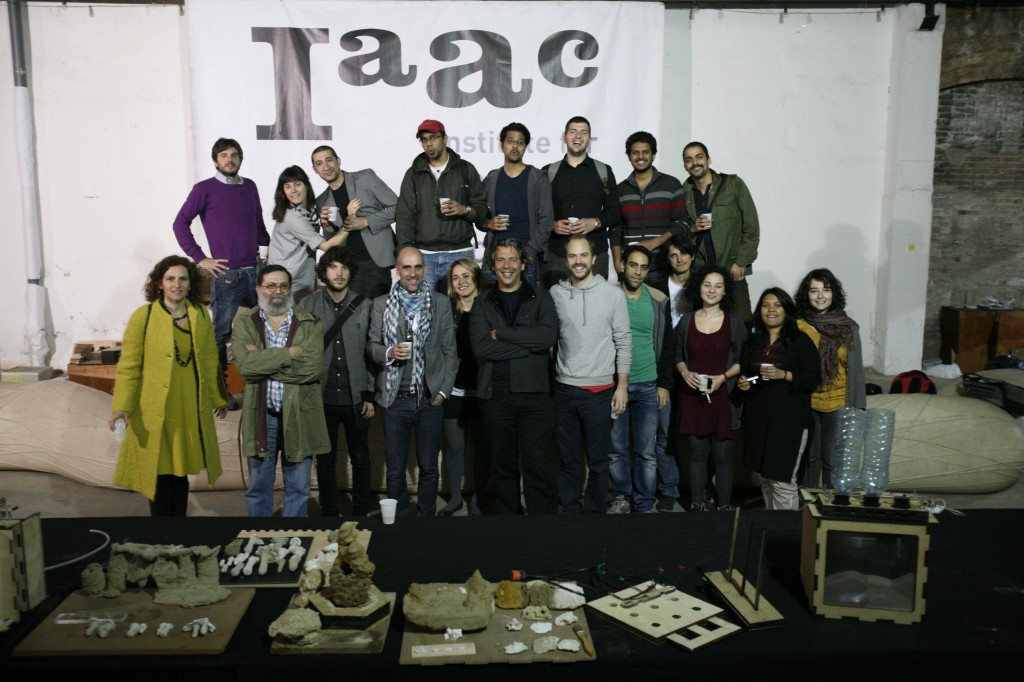
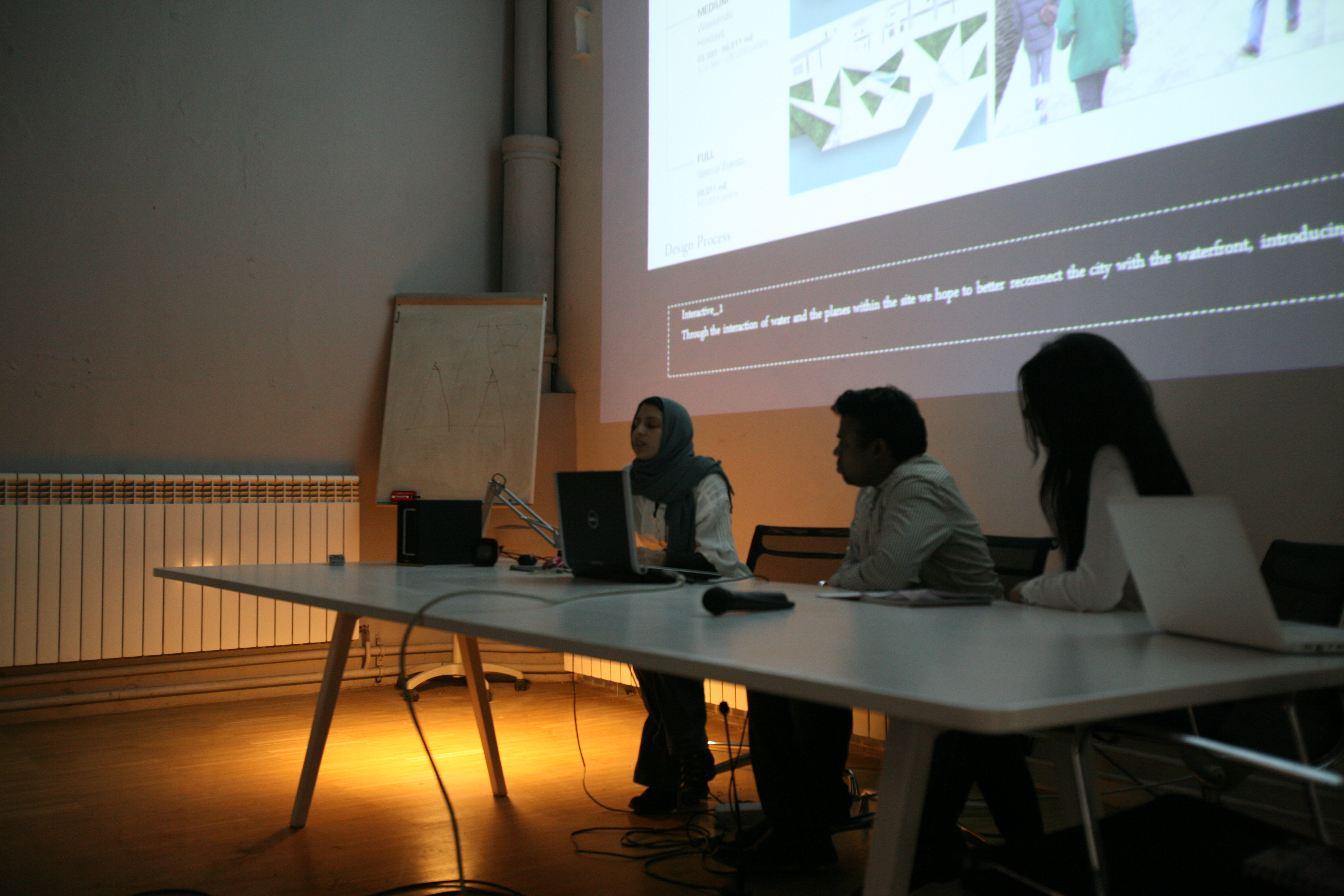
Students of the 2010/2011 Master in Advanced Architecture Emergent Territories Studio had their final presentations on Friday April 1.

In Phase II of the MAA program students attend one of three Research Studios: Self-Sufficient Buildings, Digital Tectonics or Emergent Territories. The Phase II final presentations for the Self Sufficient Buildings and Digital Tectonics Research Studios were held on separate days.

This Studio is run by Willy Müller, MAA Co-Director, assisted by Maite Bravo. For the final presentations, IAAC welcomed a guest jury: Antoni Brey (URBIOTICA), Miguel Roldán (R+B Arcquitectura), Antonio Sanmartín de Azcón (aSZ Aquitectes), and Andreu Ulied (MCRIT).

Read More »

Posted in Uncategorized | Tagged , , | 1 Comment

Digital Tectonics Research Studio- 2nd Term Final Presentations

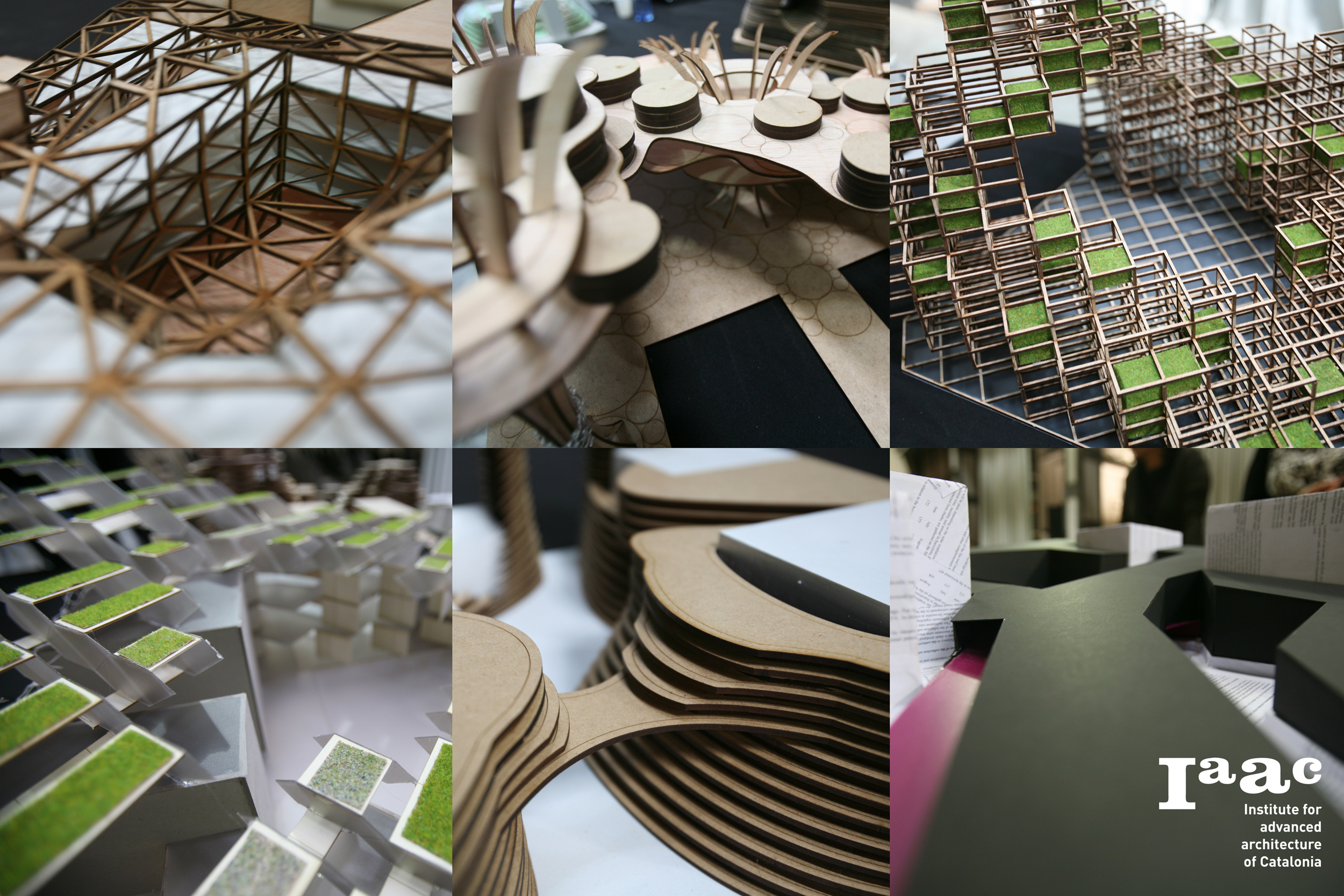
Students of the 2010/2011 Master in Advanced Architecture Digital Tectonics Studio had their final presentations on Thursday March 31.

In Phase II of the MAA program students attend one of three Research Studios: Self-Sufficient Buildings, Digital Tectonics or Emergent Territories. The Phase II final presentations for the Self Sufficient Buildings and Emergent Territories Research Studios were held on separate days.

The Digital Tectonics Studio is run by Marta Malé-Alemany, MAA co-director, assisted by Victor Viña and Brian Peters. Guest jury for the presentations included: Javier Peña (Xpiral Architecture), Oscar Tomico (TU/Eindhoven), Carlos Ipser (DHUB), Andres de Mesa (ETSAB-UPC).

Read More »

Posted in Uncategorized | Tagged , , | Leave a comment

IAAC Everywhere- MAA Research Trips 2011

(Self Sufficient Buildings- Dubai and Abu Dhabi, Above- Masdar City)

The Masters in Advanced Architecture program will be traveling the world!

Each year the MAA program takes its research out of Barcelona and explores a different region of the world. Past trips include India, Romania, Taiwan, Slovenia-Croatia, and Brazil.

This year, the three Research Studios will be exploring a different part of the world. Self Sufficient Buildings will be in Dubai and Abu Dhabi, Digital Tectonics will visit Switzerland, Austria, and Germany, and Emergent Territories will travel to Hong Kong. Each trip is related to the focus of each Research and Development Studio.

Follow IAAC’s Travels

IAAC staff from each group will be updating everyone on Twitter and we will be posting pictures and recaps regularly on the blog. Students have already set off on their travels and updates have started to come in!

Read More »

Posted in Uncategorized | Tagged , , , | Leave a comment

Self Sufficient Buildings Research Studio- 2nd Term Final Presentations


Students of the 2010/2011 Master in Advanced Architecture Self Sufficient Buildings Studio had their final presentations on Wednesday March 30.

In Phase II of the MAA program students attend one of three Research Studios: Self-Sufficient Buildings, Digital Tectonics or Emergent Territories. The final presentations for the Digital Tectonics and Emergent Territories Research Studios were held on separate days.

The project for this Research Studio: Build a Self Sufficient Block for Barcelona.

This studio is run by IAAC Director Vicente Guallart who is assisted by Rodrigo Rubio. For the final presentations, IAAC welcomed a guest jury: Cristina Sendra (Eco Intelligent Growth), Javier Peña (Xpiral Architecture) and Max SanJulian (Volido).

Read More »

Posted in Uncategorized | Tagged , , | Leave a comment

IAAC at Smart Geometry 2011

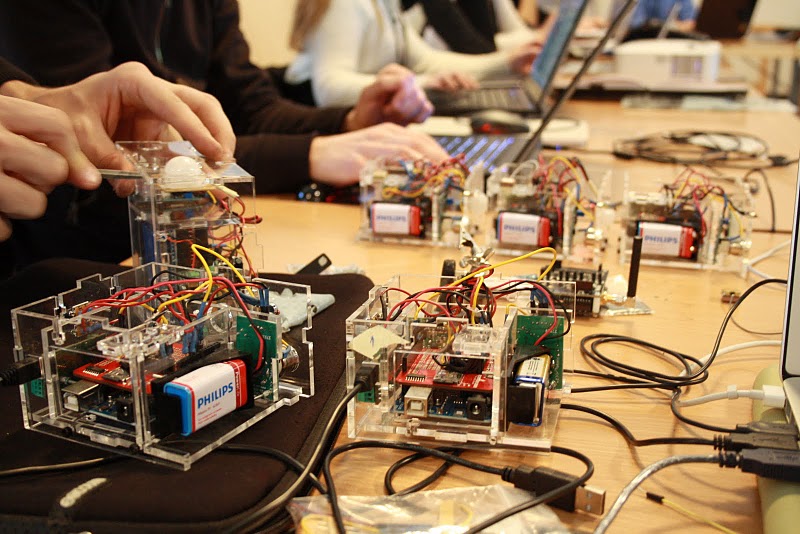
Following last’s year Smart Geometry conference, hosted in Barcelona, IAAC faculty Luis Fraguada and Tomas Diez and alumni Felipe Pecegueiro are leading the Urban Feeds cluster (assisted by MAA student Morten Bulow) at the Smart Geometry Workshops and Conferences 2011, which is taking place in Copenhagen from March 28th to 31st.

Urban Feeds cluster aims to generate design responses that scrutinize and analyze the relationships between two or more sensor parameters. Like traffic lights with sensors that are programmed to respond to fluctuations in traffic flows, the cluster aims to prototype urban interventions. These ‘behavioral prototypes’ allow the participants to design explicit behaviors and their varying degrees of expression in relation to the input parameters.

To achieve the challenge, Urban Feeds team pre-developed and produced the Ambience Sensor Kits (ASK) at Fab Lab Barcelona, supported and sponsored by IAAC.

Smart Geometry 2011 > Building The Invisible

Vast streams of data offer a rich resource for designers. User data, energy calculations, embedded sensing, material and structural simulation allows design to be situated and responsive. Design sits not separate from is environment but inhabits an ecological system, open, dynamic and interdependent. We now have the chance to instil design with an immanent intelligence creating new relationships between the user, the built and its ecosphere. From the simulation of megacities to the solid modelling of material systems, design has the potential to be informed by the real.
Posted in Uncategorized | Tagged , , , , | Leave a comment

Research Studios Prepare for Final Presentations


Phase 2 (second term) is almost over and Research Studio Final Presentations are around the corner, so everyone is busy working on their projects.

Phase 2 of the Masters in Advanced Architecture program is an Open Education Structure where students attend a Research Studio and 1 Seminar related to this studio plus 2 elective Seminars based on academic interest.

As you may have seen in previous posts Research Studio 1 (RS1) is focused on Emergent Territories, Research Studio 2 (RS2) is studying Self-Sufficient Buildings, while Research Studio 3 (RS3) is working on Digital Tectonics.

Good luck to all, keep working hard.

Read More »

Posted in Uncategorized | Tagged , | Leave a comment

Shigeru Ban Lecture at IAAC: Works and Humanitarian Activities


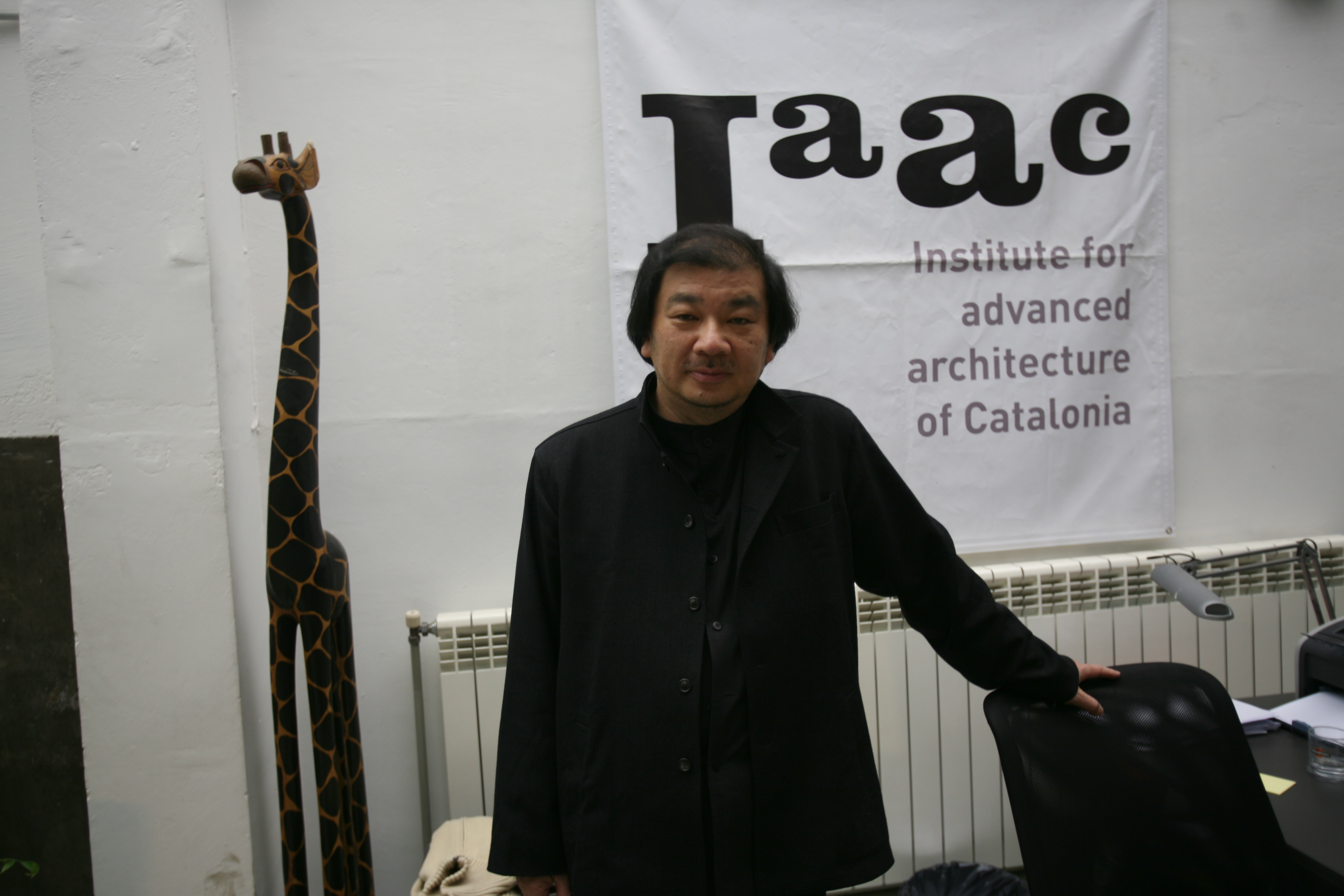
(Above: Shigeru Ban at IAAC)

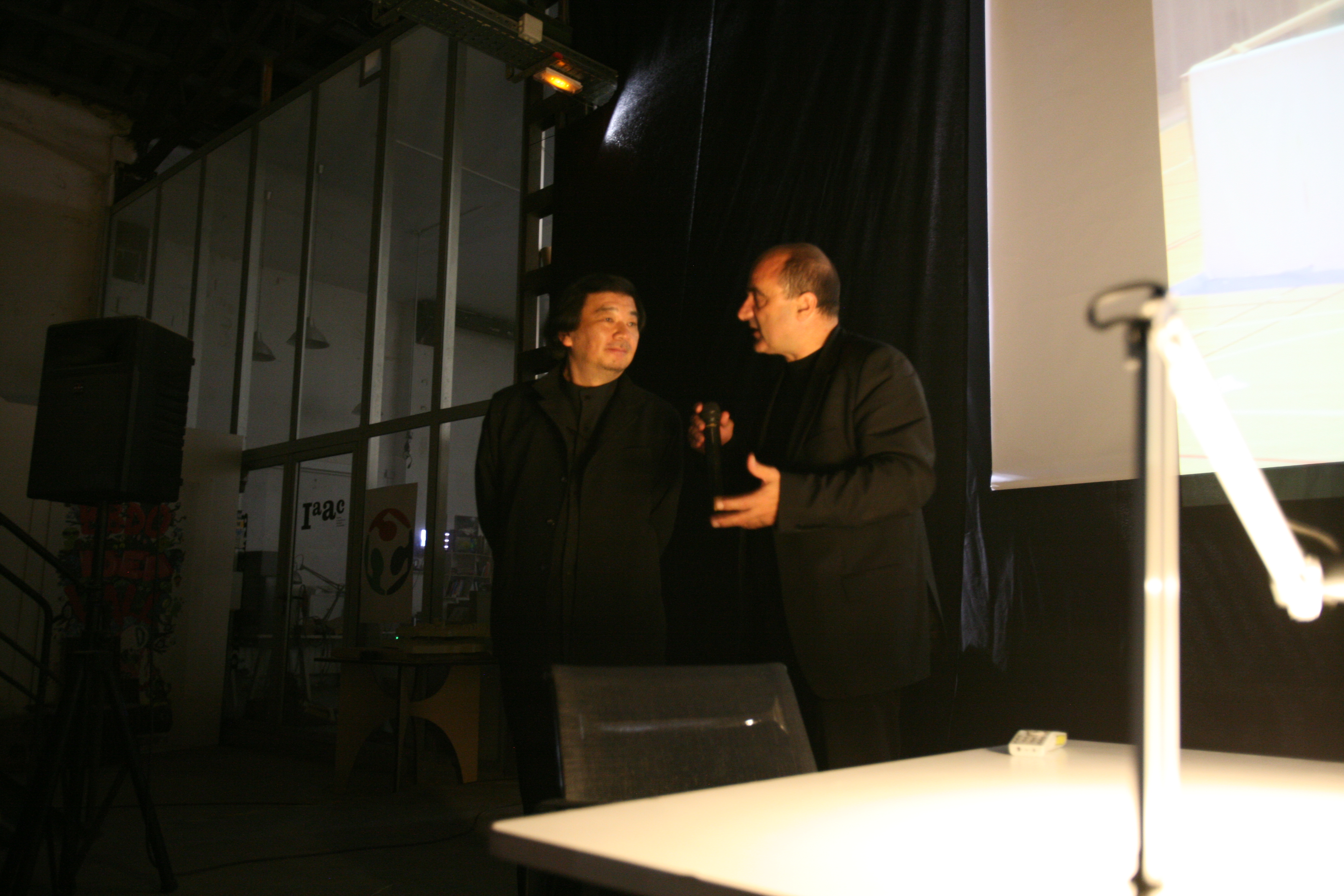
Last Friday, 18 March, IAAC welcomed Shigeru Ban for our Open Lecture Series. Despite the difficult circumstances after the terrible earthquake in Japan the previous weekend, Mr. Ban presented ¨ Works and Humanitarian Activities ¨.

In his presentation, Mr. Ban  shared with the audience projects like, the Paper House, the Nomadic Museum, the Centre Pompidou-Metz and more by giving a structural explanation as well as the conceptual background that supports his projects. He explained the  influence of modernism and Mies Van de Rohe, in terms of transparency and structural strategies, on his projects,  using the Farnsworth house and the Barcelona Pavilion as main examples.

After the devastating earthquake in Japan the previous week,  it was interesting to see how Shigeru Ban is greatly involved in humanitarian works  with disaster relief projects such as Paper Log House (Kobe of Japan in 1995, Turkey in 2000, India in 2002), Paper Church (Kobe,1995), Tsunami Reconstruction Project (Kirinda, Sri Lanka, 2005), Temporary Elementary School (Chengdu, China 2008), L’Aquila Temporary Concert Hall (L’Aquila, Italy, in progress) and his proposal for temporary shelters in Japan.

Read More »

Posted in Uncategorized | Tagged , , | Leave a comment