Rising Waves

IMG_2943 22

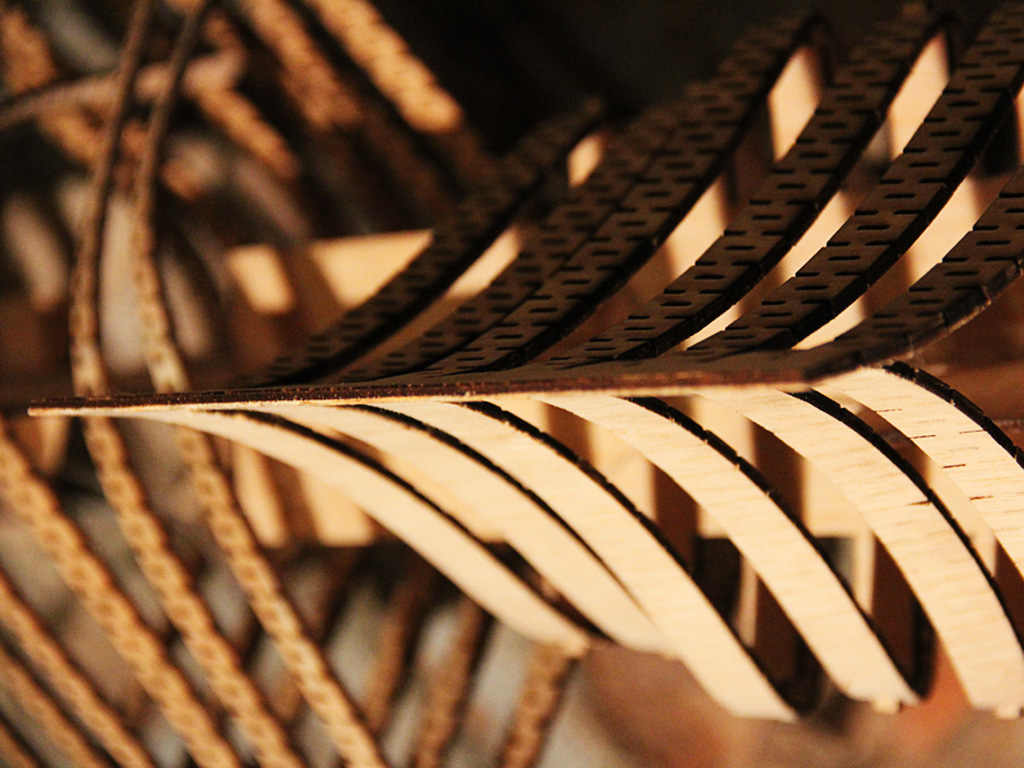
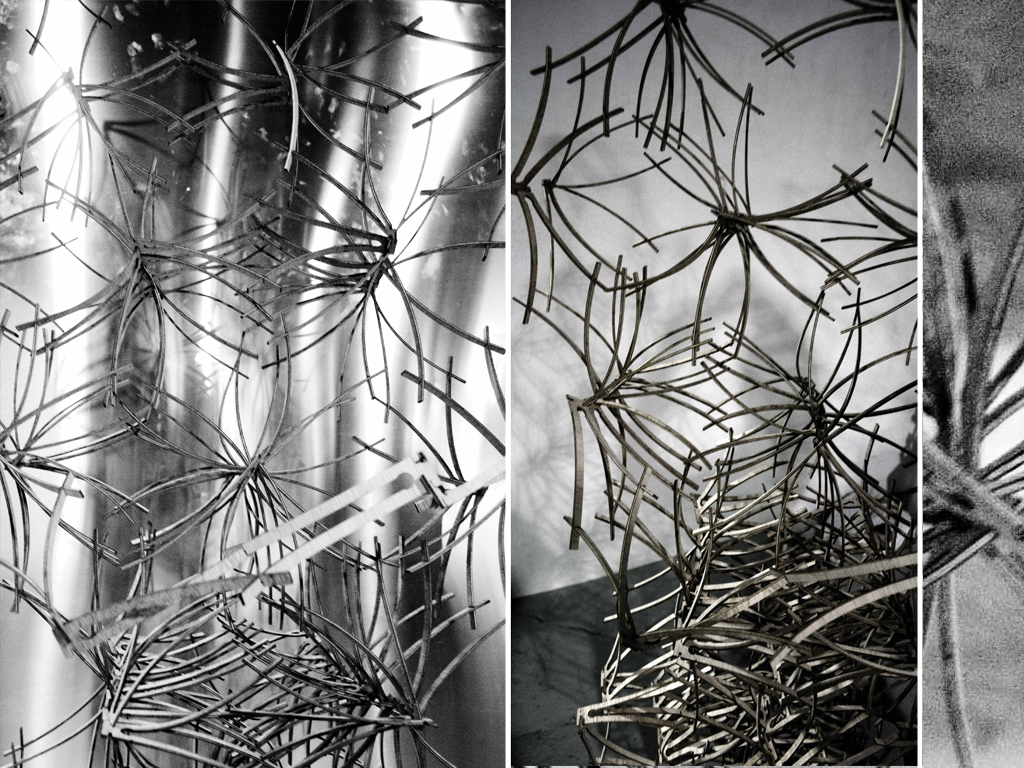
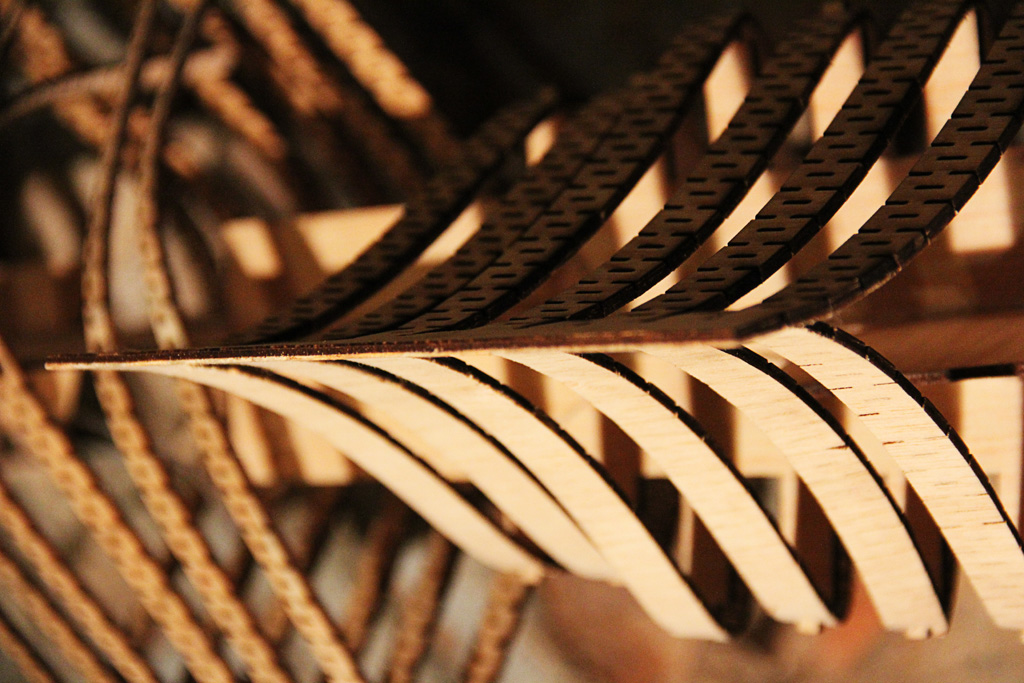
The central theme of the project was to create a structure that arose from a flat plane into a three-dimensional object while challenging the properties of the materials used.

The uniqueness of the structure lies in the individual strips that lift from the flat surface, requiring no joints hence forming smooth curves. Read More »

Posted in Akanksha Kargwal, Irina Shaklova, Mamta Srinivas | Tagged , , , , , , | Comments closed

Chopsticks

iaacblog front image

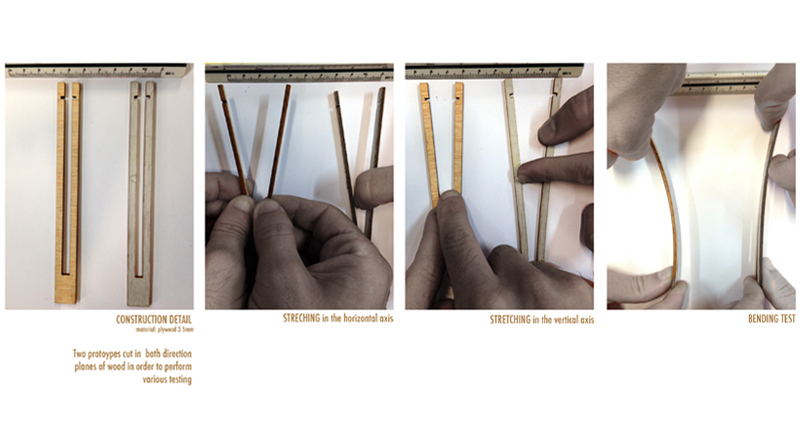
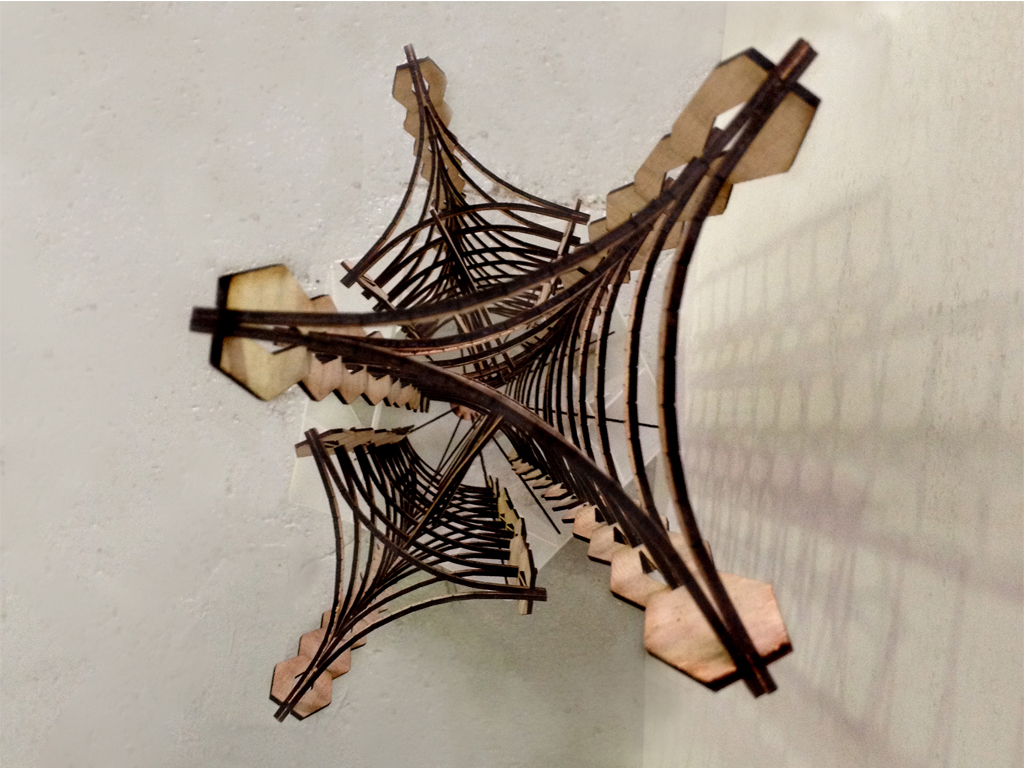
This tower was conceived by the exploration on the material and it’s stress and bending capabilities. The design process started out by testing the best of wood’s properties; tension. A component was created to explore the strength and limits of bending and twisting and the possibilities of clipping and holding under tensile strength. Several prototypes were created until one final component which combined the best bending and stretching behavior with simple and versatile clipping joints.blog 6

Read More »

Posted in Chirana Lemuel Sumendap, Karl Francalanza, Pablo Miguel Marcet Pokorny | Comments closed

Digital Crown

01 jpg

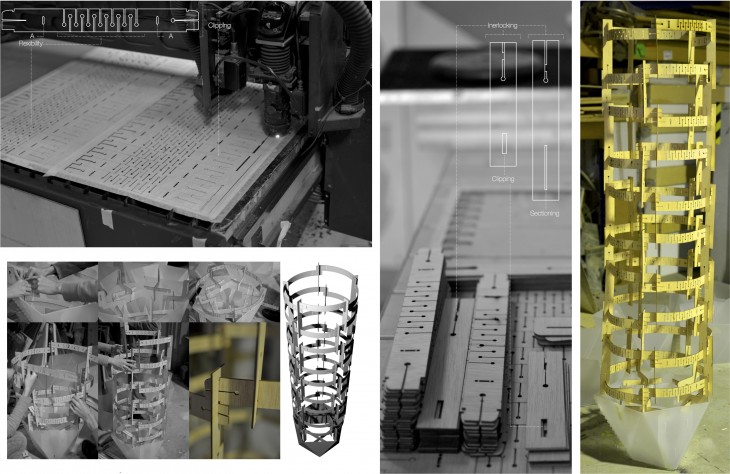
The structure is a simple constructive assembly system that allows us to experiment in a single object multiple and different types of joints and their possible variations/combinations that became our primary research, seeking to minimise waste.

The pentagonal footprint force us to generate horizontal elements that are connected by various elements in the vertical direction. The combination of both, horizontal and vertical parts is what generates height increase and stabilisation of the system when connected.

We also explored the void as an integral element in our structure, which reduces weight and helps with the distribution of the different parts to achieve an effective balance in our structure.

The result is, when unassembled; a compact structure system, easy to pack and transport,  extremely easy and quick to assemble based on the interlocking, bending, sectioning and clipping joints experimented and tested in different models and digital joinery. When assembled, is also stable and can be manipulated without the risk to be destroy.

Read More »

Posted in Dimitrios Aidonis, Gustavo Adolfo Triana Martinez, Michele Braidy | Tagged , , , , | Comments closed

InterWeave


Each element in this design is a rectangular wood strip of the same length. The width of the strips begins at 4cm and decreases gradually as the structure continues up. Structurally, the tower is organized in two perpendicular axes, crossing at a central datum. In both axes, the strips bend in an alternating pattern as they go up, switching direction at each bend’s apex. Within each axis, the strips notch together when they cross. When the two axes cross at the central datum, they weave through each other. This weaving joint (along with the surrounding bent strips acting in tension) gives the structure its stability. An “X” in one axis weaves through an “eye” in the opposing axis. The angles of each “X” determine and stabilize the position of the “eye” that encapsulates it. As the width of the strips decreases, the radius of the “eye” increases. This causes all the strips around it to increase in radius, becoming thinner in overall plan diameter. Therefore, as each section’s strips get thinner, that section of the tower gets taller.

Read More »

Posted in Efstathia Eleni Baseta, Elena Mitrofanova, Mary Katherine Heinrich | Tagged , , , , , , | Comments closed

Try-Angle Tower

valjda je dobra

The main idea of our tower was to create the most stable and, at the same time, light structure and give it an architectural view.
We were using the triangles in a top with three horizontal elements, which provide strength and stability, joined with three vertical elements and assembled layer by layer using only this one building unit.
To make the tower more stable we joined three triangles between and make it grow in 13-18 levels, it gave feeling of vertical stream.

Read More »

Posted in Jhon Alexander Giraldo Mendez, Novak Kijac, Sviatlana Matushko | Comments closed