Category Archives: Uncategorized

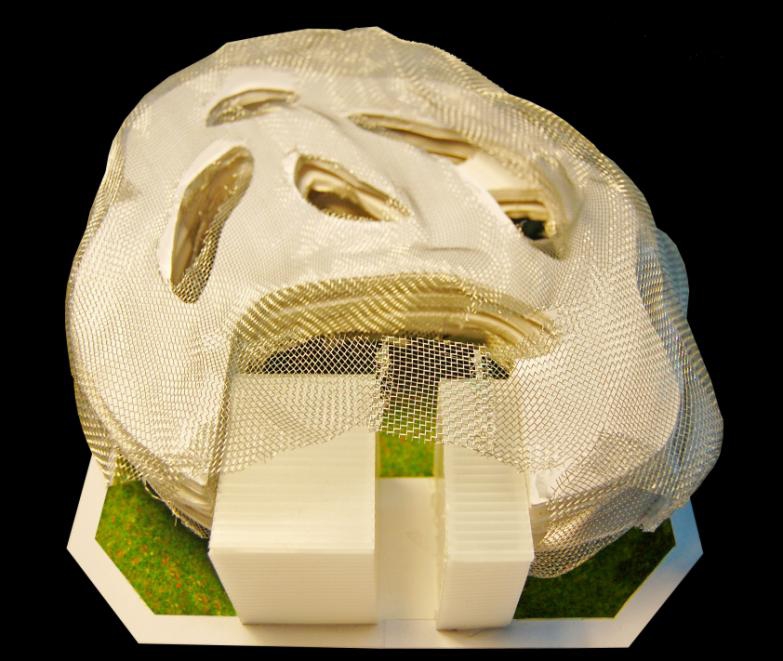
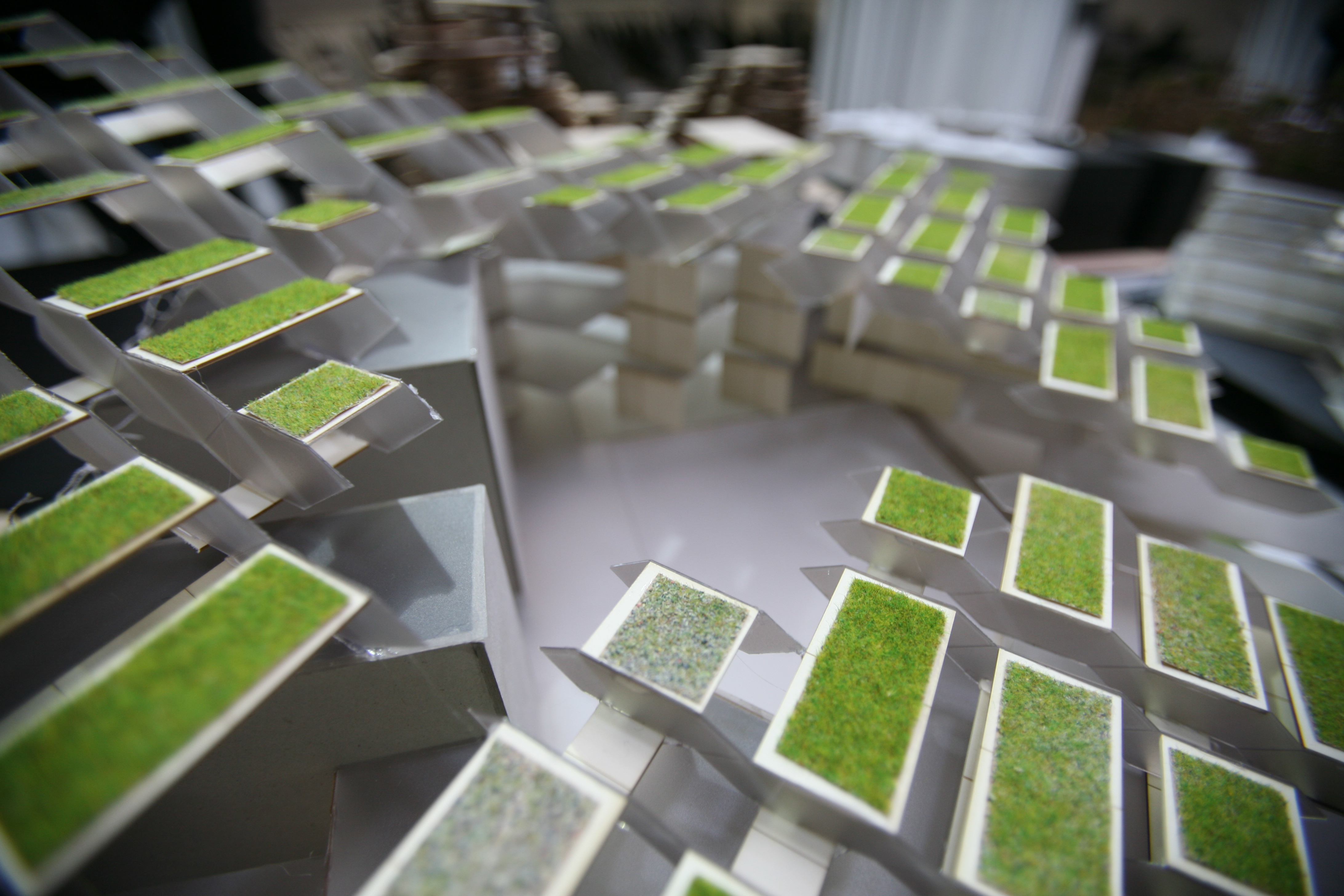
MAA Final Projects: Inverted Topography and Public Space Below

MAA Student: Luz Michelle Lavayen (Panama)

Research Studio: Self- Sufficient Buildings

Studio Instructor: Vicente Guallart, IAAC Director

Project Goal: Create a self-sufficient urban block for 22@, Barcelona.

Student’s Summary:

“The main concepts for developing a self-sufficient city block  were to free the ground level, create an underground patio and use it as a public green space in order to connect and give back interactive spaces to the city. Analyzing the structure of a tree and its growth I can relate thesis process to the project. Organizing the different programs according to better location for those activities and also connecting them. The inverted topography of the building will work as structure, vertical circulation and fluid system for sustainable elements, it also becomes the skin of the building. This metabolic structure will serve to harvest water to produce energy, clean grey water for farming and public green areas, waste management, geothermal system, wind power from turbines located in the top patios and solar photovoltaic panels on south side of the block where it can take advantage of the most of radiation.”

Read More »

Posted in Uncategorized | Tagged , , | Leave a comment

MAA Final Projects: Following the Sun in Eixample

MAA Student: Javier Gonzalez (Spain)

Research Studio: Self-Sufficient Buildings

Studio Instructor: Vicente Guallart, IAAC Director

Project Goal: Create a self-sufficient urban block for 22@, Barcelona.

Student Summary:

Trying to look to the past by adapting the proposal to Ildefons Cerdá’s urban structure to keep the character of the city (not only adjusting the façades to the pre-existing grid to maintain the alignment of the streets, but also providing a big central courtyard working as public space inside the block, as the original thoughts of Ildefons Cerdá), the building also tries to look forward to the new paradigm of Self-Sufficient architecture.

Taking advantage of solar energy as the easiest renewable energy source in Barcelona, the building tries to orient itself to the position of the sun. Its form follows the sun tilting the main “roof façade” into a proper angle for solar energy gathering, while also decreasing its height in the southern part and increase it in the northern part, in order to allow the best access to the solar daylight as possible.

The characteristic element of this building, its “roof façade”, has been though as a double skin which will contain a mixed system of photovoltaic panels and openings, based on Ecotect analysis and their own interior program, thus optimizing the position of panels and voids. Overheating inside the building will also be controlled through the double skin, allowing a natural flow of air through the gap between the interior and the exterior skin.

Read More »

Posted in Uncategorized | Tagged , , , | Leave a comment

MAA Final Projects: Ancient Inspiration on Water Cycling

MAA Student: Hugo Carvallo (Peru)

Research Studio: Self- Sufficient Buildings

Studio Instructor: Vicente Guallart, IAAC Director

Project Goal: Create a self-sufficient urban block for 22@, Barcelona.

Student’s Summary:

“The metabolism of the building/block [project] for the Self-Sufficient Building Studio is based on water.

Water as a natural element not only provides life to the animals and plants of the planet, but it also is an important part of many systems and cycles. The proposed design looks to balance human beings lives and the nature of the world with its chaotic and problematic social issues, and economical conditions.

To start, I took three main references that helped me to develop this project.  As natural reference, I am taking under consideration the water cycling; and under historical reference, I am taking under consideration the farm terrace that many ancient cultures used, such as the Inca.  I would like to make a special emphasis on learning about ancient ways of living because they were very sustainable and self-sufficient.  And last but not least, I considered current technology, which will improve the idea of recycling the ‘water cycling’ and therefore provide energy within it.

Under the natural consideration, it is been known that water cycles naturally through an infinite process.  This similar process, using current technology, will imitate the benefit to the inhabitants of the block.

The farm terrace will work perfectly in the sense that water will follow a determinate path where water cycling will be appreciated and noticeable through the metabolism of the building.  Through this, remains from the farms will be collected and processed thereafter to provide energy throughout the building.”

Read More »

Posted in Uncategorized | Tagged , , , , , | Leave a comment

A Royal Reception for IAAC in Tel Aviv

(Above- IAAC Staff Areti Markopoulou and Luis Fraguada (left) introduce Parameter: Digital Collaborative Design to Felipe de Borbon y Grecia and Letizia Ortiz Rocasolano)

On April 10, 2011, in the presence of Their Royal Heighnesses Felipe de Borbon y Grecia and Letizia Ortiz Rocasolano of Spain, IAAC Global School Director Areti Markopoulou and IAAC Digital Tools Faculty Luis Fraguada inaugurated the exhibition Parameter: Digital Collaborative Design also with the Spanish Ambassador to Israel, Mr. Alvaro Irenzo. The exhibition is a collaboration with The College of Management in Tel Aviv.

Read More »

Posted in Uncategorized | Leave a comment

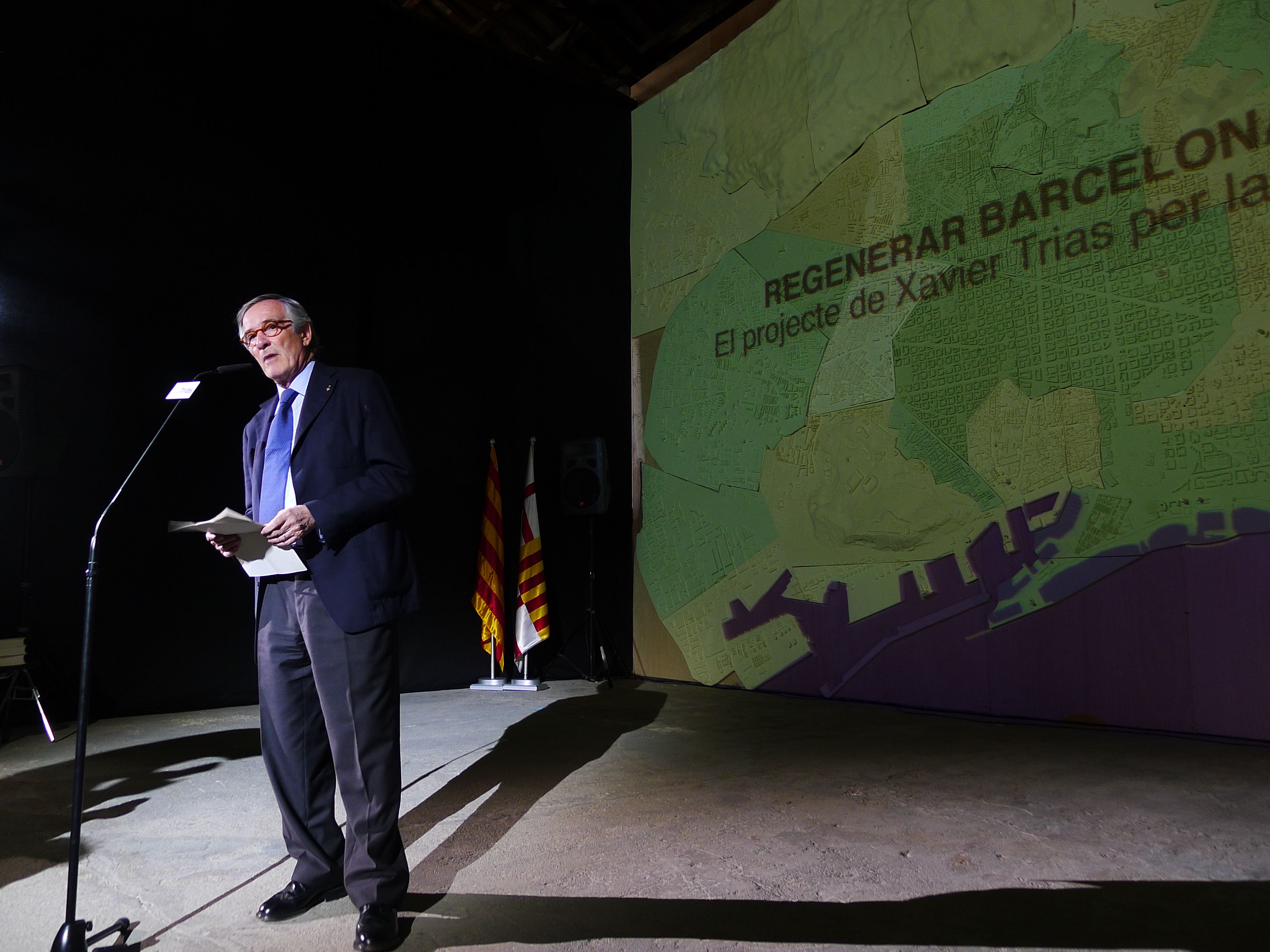
Regenerar Barcelona: The Xavier Trias project for the city


(Above- Xavier Trias, candidate for Mayor of Barcelona, introducing the plan to Regenerate Barcelona)

Earlier today, IAAC hosted a collaborative event with Xavier Trias, candidate for Mayor of Barcelona. IAAC Director, Vicente Guallart presented a plan Regenerate Barcelona and to make it a world leader in energy efficiency. The plan presented today explored how to humanize urbanization while facing the challenge of regenerating the city that is already built into a smart, efficient city.

Read More »

Posted in Uncategorized | Leave a comment

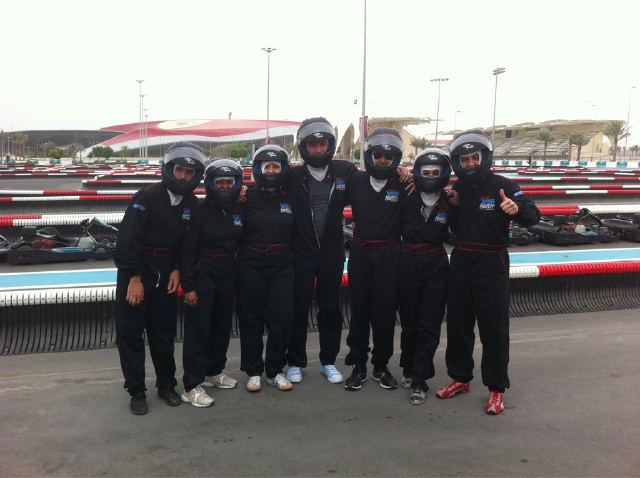
MAA Research Trips: Off To the Races

(Above- RS2 at Yas Marina F1 Circuit, Abu Dhabi. IAAC Tweet: “RS2 at Formula 1 Karts! The group had amazing loop times…”)

Students in the Masters in Advanced Architecture Program are split into three Research Studios (RS1: Emergent Territories, RS2: Self Sufficient Buildings, RS3 Digital Tectonics). This past week each explored a different part of the world. Each trip was related to the focus of each Research and Development Studio.

Looking back on the trips each research group spent time learning about architecture and technology through visits to various race tracks, stadiums, and automobile engineering facilities. They explored the many ways that automobiles and racing influence architecture and urban planning and development.

Read More »

Posted in Uncategorized | Tagged , , | Leave a comment

MAA Research Trips: The Hong Kong Project

Students in the Masters in Advanced Architecture Program are split into three Research Studios (RS1: Emergent Territories, RS2: Self Sufficient Buildings, RS3 Digital Tectonics). This week each will be exploring a different part of the world. Each trip is related to the focus of each Research and Development Studio.

It is Friday and the groups are wrapping up their trips from around the world. While RS2 is returning from Dubai, RS3 will spend the weekend in Basel and Geneva.

RS1 is spending the final two days in Hong Kong conducting research projects around the city. In these projects, students will be exploring the city through five different tours which will examine: ports, waterfront development, parks, transportation systems and information networks. The goal of the research is to study urban zones with in relation to how they impact the culture of the city. Each group will create 3-5 minute video documentations of onsite information supported by graphical representation.

Read More »

Posted in Uncategorized | Tagged , , , | 1 Comment